
Hands, linen, and the station
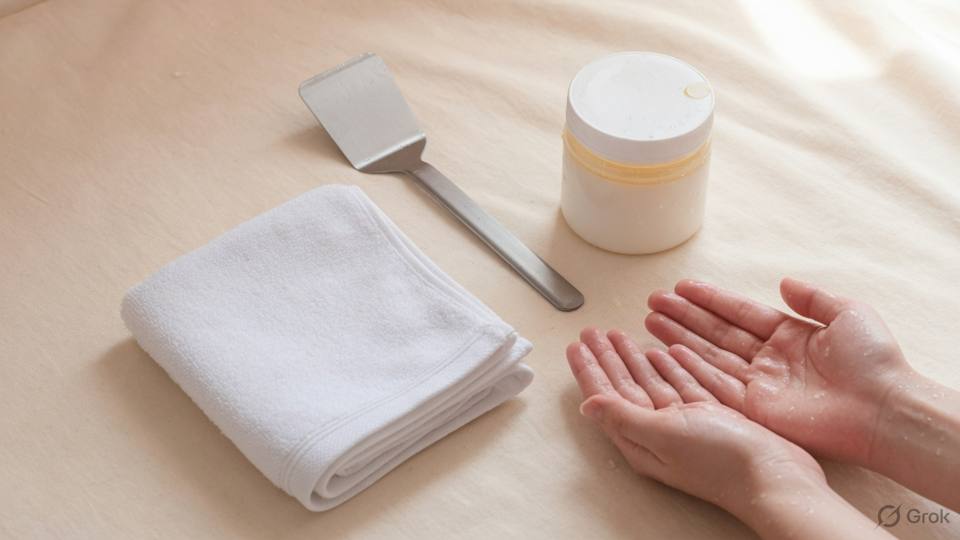
Hand washing is the first and last thing you do for every client. Wash with soap and running water for at least twenty seconds, covering the palms, the backs of the hands, between the fingers, the thumbs, and under the nails. Do it before you set up and after you finish, and let the client see it when the station allows. Dry with a clean paper towel, not a shared cloth. Keep the nails short and clean, and remove rings and watches that trap product and water. A hand sanitiser is useful between washes, but it does not replace soap when the hands are visibly soiled.
Linen is either clean or it is not. A towel that looks clean may have been used on another client and folded again. Use a fresh sheet, towel, and headrest cover for every client, and put used linen straight into a closed laundry bin rather than on the trolley. Do not reuse a towel to wipe a spill and then place it back on the bed. Keep clean linen in a closed cupboard, away from the sink and the waste bin. If the salon is busy, keep a visible reserve so that nobody is tempted to stretch one set across two clients.
The station needs a routine, not a deep clean once a week. Wipe the bed, the trolley, the lamp handle, the chair arms, and the product bottles with the salon's approved disinfectant at the label's contact time. Contact time matters: a spray that is wiped off immediately has not had time to work. Use a fresh cloth or paper towel for each surface, and do not dip a cloth back into a clean bucket after it has touched a dirty surface. Keep clean tools on a clean tray and used tools in a closed bin, never loose on the counter beside a client's belongings.
Your own health belongs in the hygiene plan. If you have a cut, a rash, or an infection on the hands, do not treat clients. A small cut can be covered with a waterproof dressing, but a weeping or painful lesion means you stay off the floor. Do not work with a fever, a cough that you cannot contain, or a skin infection that could transfer to a client. Wear gloves when the task calls for them, and change them between clients. Hygiene is not a performance for inspection; it is the set of habits that protects the person in the chair.
- 1. Wash your hands before setup and after every client, for at least twenty seconds.
- 2. Cover palms, backs, fingers, thumbs, and under the nails, then dry with paper towel.
- 3. Keep nails short and clean, and remove rings and watches during service.
- 4. Use a fresh sheet, towel, and headrest cover for every client.
- 5. Put used linen into a closed laundry bin, not on the trolley or the bed.
- 6. Wipe the bed, trolley, lamp handle, and chair with disinfectant at the label contact time.
- 7. Keep clean tools on a clean tray and used tools in a closed bin.
- 8. Stay off the floor when you have a hand infection, a fever, or a weeping lesion.
Salon example
A salon has two estheticians and a shared trolley. On a Saturday, one of them wipes the bed with disinfectant and immediately dries it with a towel because the next client is waiting. The other esthetician notices and points out that the label requires the surface to stay wet for the stated contact time. They reset the routine: one person sets up while the other cleans, and the bed is sprayed first so that it can sit while the linen is changed. They also move the clean towels away from the waste bin, which had been placed too close in the rush. The next client arrives, sees a fresh sheet and a visibly washed pair of hands, and comments that the salon feels clean. The change costs two minutes and prevents a complaint that no one would have traced back to a wiped-dry surface. They keep the new order for the rest of the day and add a small timer to the trolley so the contact time is not a guess, and neither esthetician has to remember it while a client waits.
Caution: A surface that is sprayed and wiped immediately has not been disinfected; the label contact time is part of the product, not an optional extra.
Wax pots, spatulas, and the double-dip rule
Double-dipping is returning a stick or a spatula to a shared wax pot after it has touched a client's skin. It carries skin cells, hair, bacteria, and sometimes blood into the pot, and the next client receives a little of the previous one. The pot is warm, which is a friendly temperature for microbes, and the wax is not sterile. The rule is simple: never double-dip. Use a single-use stick, take what you need, and throw the stick away. If you need more wax, use a new stick. This applies even when the client is a regular, even when the area looks clean, and even when the pot is nearly empty.
Pot care supports the rule. Keep the lid on between uses, date the pot when it is opened, and follow the manufacturer's instructions for cleaning and replacing the wax. Do not top up an old pot with new wax and pretend it is fresh. Do not use a pot that has visible hair, debris, or a changed smell. If a pot is contaminated, the correct action is to discard the wax and clean the pot according to the label, not to pick out the visible pieces and carry on. A salon that saves a little wax this way risks a skin infection that costs far more than the pot.
Temperature control sits beside hygiene. A pot that is too hot burns; a pot that is reheated repeatedly may change consistency and become difficult to work with. Stir with a clean, dedicated tool, not the stick that is about to touch skin. Keep the pot away from the client's clothes and the clean linen. If wax drips on the floor or the trolley, clean it at once so that no one steps in it. Keep the cable away from the client's arms and the water source. These are small habits, but they are the difference between a professional station and a hazardous one.
Wax strips, spatulas, and gloves are single-use items, and they go into the waste bin after one client. Do not leave a used strip on the bed while you finish the other leg, and do not put a used spatula back on the clean tray. Keep a small bin beside the trolley so that the correct action is also the easy one. At the end of the day, empty the bin, clean the pot exterior, and wipe the shelf. A client may not see the pot, but they can see the bin, the tray, and the way you handle a stick. Those visible habits are the salon's reputation.
- 1. Use a single-use stick or spatula for every dip into a shared wax pot.
- 2. Never return a stick that has touched skin to the pot, even for the same client.
- 3. Throw the stick away and take a new one if more wax is needed.
- 4. Keep the pot lid on between uses and date it when opened.
- 5. Discard wax that has visible hair, debris, or a changed smell.
- 6. Stir with a clean dedicated tool, not the stick that will touch skin.
- 7. Put used strips, spatulas, and gloves in the bin after one client.
- 8. Clean the pot exterior and the shelf at the end of the day.
Salon example
A new client, Asha, watches the esthetician prepare a leg wax. The esthetician takes a wooden stick, dips it once, spreads the wax, and drops the stick into the bin. For the next strip she takes a fresh stick. Asha asks whether that is wasteful, because her previous salon used the same stick for the whole leg. The esthetician explains that the stick touched her skin and that returning it would put skin cells and bacteria into the pot that other clients share. She shows Asha the pot lid and the date on the label, and says the salon discards wax that looks contaminated. Asha relaxes. Later, the esthetician notices a hair on the pot rim and removes it with a clean tissue, then cleans the rim before closing the lid. The small visible action does more for trust than a poster on the wall. Asha books a second appointment and tells the esthetician that she noticed the fresh stick before she was told why it mattered, which is the kind of trust a poster cannot buy, and she asks whether the salon also uses a fresh stick for the lip.
Caution: No double-dip, not even for a regular client or the same area; the pot is shared, even when the skin looks clean.
Tools, waste, and the unwell worker
Reusable tools need a sequence: clean, then disinfect, then store. Cleaning removes product and organic matter; disinfection kills the organisms that remain. A tool that is sprayed before it is cleaned may keep a film that protects what is underneath. Use the salon's approved disinfectant at the label dilution and contact time, and let the tool dry on a clean surface. Metal extractors, tweezers, scissors, and bowls all follow the same rule, and a tool that cannot be cleaned properly should be replaced rather than reused. Brushes need their own care: wash the bristles with the appropriate cleanser, shape them, and dry them flat so that water does not sit in the ferrule.
Waste has categories. Ordinary waste such as tissues, gloves, wax strips, and packaging goes into a lined bin. Sharps, if the salon uses them, go into a sharps container, never a plastic bag. Waste that carries blood or body fluid needs the handling the local rules require, and the person handling it should wear gloves. Do not press down on a full bin with a bare hand, and do not leave a bin open beside clean linen. Empty the bin before it overflows, and wash your hands after handling it. These are unglamorous tasks, but they are part of the service.
A blood or body fluid incident needs a calm, fixed response. Stop the service, put on gloves, and clean the area with the approved disinfectant at the label contact time. Discard the contaminated materials safely, change the linen, and wash your hands. Record what happened, where, and what was done. If the client is bleeding, give them a clean tissue or dressing and avoid contact with the wound. If the incident involves a cut on your own hand, cover it, stop treating, and follow the salon's policy. Do not improvise a stronger chemical mix; the label is the limit, and a stronger mix can damage the surface you are trying to protect.
The unwell worker is the hardest part of hygiene to enforce, because income depends on attendance. A fever, a cough, a skin infection on the hands, or a weeping lesion means no client contact. A cold with frequent sneezing is a reason to wear a mask or to stay home, depending on the salon's policy. Do not share a water bottle, a towel, or a phone at the station. If you feel unwell during a service, finish safely or hand over, wash your hands, and tell the manager. A salon that protects its staff from working sick protects its clients as well, and it keeps the people who work there from spreading an infection through the team.
- 1. Clean reusable tools before you disinfect them.
- 2. Use the approved disinfectant at the label dilution and contact time.
- 3. Let tools dry on a clean surface before storing them.
- 4. Wash brushes with the proper cleanser, shape them, and dry them flat.
- 5. Put ordinary waste in a lined bin and sharps in a sharps container.
- 6. Wear gloves for waste that may carry blood or body fluid.
- 7. Stop the service for a blood incident, clean at the label contact time, and record it.
- 8. Stay off client contact with a fever, a hand infection, or a weeping lesion.
Salon example
During a brow wax, the client flinches and a small bead of blood appears at the follicle. The esthetician stops, puts on gloves, and presses a clean tissue to the spot. She removes the wax residue, cleans the area with the approved disinfectant at the label contact time, and puts the used tissue and glove into the waste bin. She changes the towel and the headrest cover, even though only a small area was affected. She writes the incident on the card and tells the client to keep the area clean and to call if it spreads. The client is embarrassed, and the esthetician does not make a performance of the incident. She finishes the other brow only after the area is clean, and she does not re-wax the spot. The calm response keeps the client comfortable and the station safe. The esthetician also notes that the follicle bled after a single pass, which may mean the skin was thin there, and she plans a patch test before the next wax on that brow, and she books the client for a quiet weekday rather than a busy Saturday.
Caution: A small bleed is still a body-fluid incident; stop, glove, clean at the contact time, change the linen, and record it.
This is a Nandu Nai textbook. It is a private brand book, not a government licence, and it does not give the right to give medical treatment.