
Records that protect the client and you
A client record is a clinical document written at the chair, not a memory aid written at the end of the day. It carries the brand and line, the shade or shades, the developer volume, the ratio, the development time, the actual time used, the result, any band or patch, and the plan for the next visit. It also carries the consultation notes: the levels at the root, mid-length, and ends, the grey percentage, the porosity and elasticity, the water at home, and the products already on the hair. Without those fields, the next visit is guesswork, and guesswork is what turns a loyal client into a correction client.
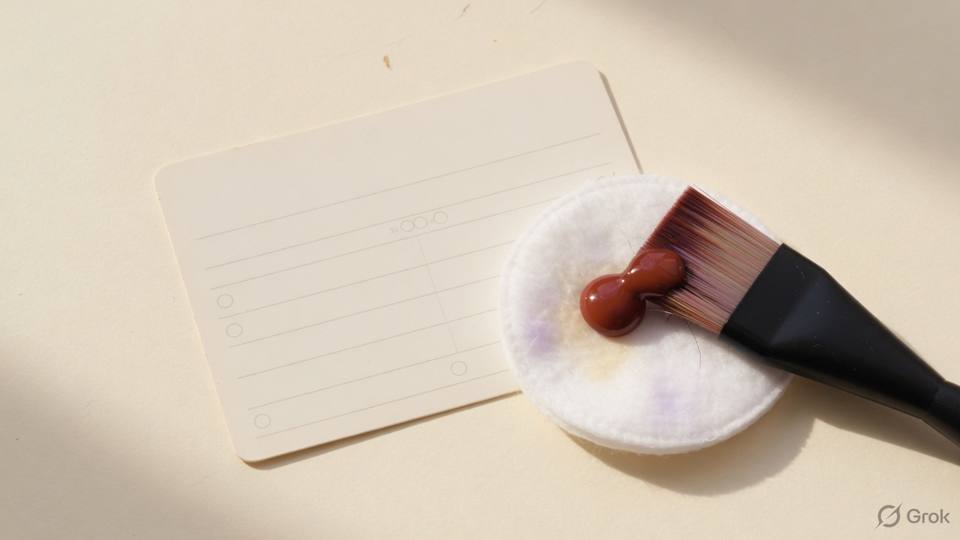
Write the record while the colour develops, not after the client has left. The details that matter are the ones you will forget: which temple was applied first, how long the ends received product, whether the toner was diluted, and how the strand behaved at twenty minutes. A quick note on the card at each stage takes seconds and saves the whole next appointment. If the salon uses software, enter the same fields there. If it uses paper, keep the paper in a locked drawer, because a client record contains personal and health information. A record that is lost or illegible offers no protection to anyone.
Photographs are part of the record, with the client's permission. Take a before photograph in daylight at the same angle each time, and an after photograph under the same light. Do not use a filter, and do not promise the client a result based on a photograph taken under a ring light. Store the images the way the salon stores other client data, and note in the record that consent was given. A photograph is evidence of the starting point and the result, and it is the most useful tool in a disagreement about what the colour looked like on the day.
The record also protects the colourist. If a client reports a reaction, the card shows what was used, how it was tested, and what advice was given. If a client asks for a correction that the hair cannot take, the card shows that the risk was explained and the staged plan was offered. If a client returns with a complaint about fading, the card shows the formula, the time, and the aftercare advice. None of this is defensive paperwork. It is the ordinary evidence of professional work, and it is the reason a well-run salon can resolve a problem in one conversation instead of an argument.
- 1. Record brand, line, shades, developer volume, ratio, and development time at the chair, not from memory.
- 2. Write the starting levels at root, mid-length, and ends, the grey percentage, porosity, and elasticity.
- 3. Note the actual time each zone received and any band, patch, or uneven result.
- 4. Record the strand test formula and result, and any product that failed or behaved unexpectedly.
- 5. Take before and after photographs in daylight with the client's consent, and note the consent.
- 6. Note the aftercare advice given, including the 48 hour wash wait if the brand requires it.
- 7. Write the next visit plan and date on the card before the client leaves.
- 8. Store records securely, because they contain personal and health information.
Salon example
A client returns six weeks after a global colour and says the shade has faded to a dull green at the ends. She is upset and asks whether the product was faulty. I open her card. It shows the brand, the level five natural base and the level five ash, the 20 volume at the root, the 10 volume at the ends, the thirty-five minute root time and the ten minute pull-through, the strand test result, and the note that the ends were porous. It also shows that she was advised to use a colour-safe shampoo and to book a gloss at four weeks, and that she declined the gloss. The green cast is consistent with ash on porous ends and a delayed gloss, not with a faulty product. I explain this without blaming her, offer a gloss to correct the tone, and book it. The record turned a complaint into a plan, and the client left satisfied. She also asks why the card needs the water source, and I explain that the same water will meet the next colour and that the note saves a second diagnosis.
Caution: A record written from memory at the end of the day is not a record. Write each stage while the colour is on the hair.
PPD, patch tests, and reaction signs
PPD, paraphenylenediamine, is a dye intermediate used in many permanent hair colours, and it is a common cause of allergic contact dermatitis. An allergy can develop after years of use with no problem, so a client who has coloured for a decade is not automatically safe. The signs include itching, redness, swelling, a rash, blistering, and swelling around the eyes or face. A reaction can appear within hours or over the next two days. If a client reports any of those signs after a colour, do not colour again, do not try a different brand, and refer the client to a doctor or a dermatologist. The next exposure can be worse than the first.
A patch test is for a client with no reaction history, and it is done before the service as the brand instructs, usually forty-eight hours ahead. Apply a small amount of the mixed product to the inner elbow or behind the ear, leave it as directed, and check for a reaction. Record the date, the product, the site, and the result. A negative patch test does not make the service risk-free, and the client should hear that sentence. The test reduces risk; it does not remove it. If the client cannot come in for the test, that is a reason to reschedule, not a reason to skip it.
The eyelash and eyebrow rule is separate, and it is often misunderstood. Hair dye products carry a caution that they must not be used for dyeing eyelashes or eyebrows, because the eye area is different and the risk is severe. Eyelash and eyebrow tint is not the hair-dye patch-test exemption, and a patch test on the arm does not make an eyelash tint acceptable. Do not use a hair colour, a henna product, or a black dye on lashes or brows. If a client asks for it, explain the legal and safety position and refer to a specialist service that uses products intended for that area. This is not a salon preference; it is a boundary.
The regulatory context is worth knowing because clients ask about it. In the United States, the FDA treats coal-tar hair dyes as a special category with labelling requirements, including a caution about skin irritation and a preliminary test, and it states that these products must not be used for dyeing eyelashes or eyebrows. The FDA also notes that a negative patch test does not guarantee that a reaction will not occur. Those two points are enough to have a calm conversation at the chair: test before use when there is no history, and never put hair dye on the eye area. The salon rule is simpler than the regulation: if there is a reaction history, no colour today.
- 1. Ask every client, every visit, about swelling, burning, itching, or a rash after any colour.
- 2. Ask specifically about black dye and black henna, because both raise the risk of PPD sensitisation.
- 3. If there is a reaction history, do not colour, do not switch brands, and refer to a doctor.
- 4. Patch test a client with no history 48 hours before, on the inner elbow or behind the ear, per the brand.
- 5. Record the patch test date, product, site, and result, and tell the client a negative test is not a guarantee.
- 6. Never use hair dye, henna, or black dye on eyelashes or eyebrows, because the eye area carries a severe risk.
- 7. Treat eyelash and eyebrow tint as a separate service with its own products, not as the hair-dye exemption.
- 8. Refer any client with a reaction, and do not test a small amount on the scalp to see what happens.
Salon example
Shalini has been colouring her hair every six weeks for eight years and has never had a problem. She arrives for a root retouch and mentions that her scalp itched for two days after the last visit and that her eyelid was slightly puffy on the second morning. She assumed it was the weather. The card shows no previous reaction, and the formula has not changed. I do not colour her. I explain that itching and eyelid swelling after a colour are signs of a possible allergic reaction, that the next exposure can be stronger, and that she needs to see a doctor before any further colour. She asks whether a different brand would be safer, and I say no, not without medical advice, because the sensitiser may be in several lines. I give her the date and the formula from the card for the doctor, and I book a consultation for after the medical review. She is annoyed, then grateful. Colouring her that day would have been the easiest ten minutes of my week and the worst decision of her year.
Caution: Itching, swelling, or a rash after a colour means no further colour until a doctor clears it. Do not test a small amount on the scalp to see whether it happens again.
When you must refuse
Refusal is part of the craft. Do not colour today when the scalp has broken skin, sores, weeping, or a rash, because a permanent colour on an inflamed scalp can worsen the inflammation and can be absorbed differently. Do not colour when the client reports a previous reaction to colour, black dye, or black henna. Do not colour when the hair fails the elasticity test or feels gummy when wet, because the structure is already compromised and colour will not repair it. Do not promise platinum in one day from a level two base with damaged ends. Do not colour a pregnant or breastfeeding client without a doctor's clearance. Do not lighten a henna or metallic-salt history without a strand test, and often not even then.
Say it plainly and without judgement. A short sentence works: we are not colouring today, because the scalp needs to heal first, and here is the referral. Then offer the alternative: a treatment, a cut, a consultation, a date next month. Do not lecture, do not imply the client has been careless, and do not negotiate the boundary in exchange for a booking. A client who is refused safely often returns; a client who is coloured into a reaction does not. The refusal is a service, and it should be delivered with the same care as the colour you would have applied.
Document the refusal. Write what you saw, what you advised, and what the client chose to do. If the client insists on colour despite the advice, and the salon decides not to proceed, the record should show that the risk was explained. If the client goes elsewhere, that is their choice, and the record protects the salon. If the client is pregnant and has no clearance, note that the decision was theirs and that the doctor's clearance was requested. These notes are not bureaucracy; they are the memory of a professional conversation, and they matter if the same client returns with a problem.
Refusal also applies to the service the client wants but the hair cannot take. A client who wants a five level lift on porous, over-processed hair is asking for breakage, even if she is willing to pay. Offer the staged plan, explain the timeline, and let her choose the first stage. If she refuses the plan and demands the result, the answer is still no, because the hair will not survive the service and the salon will own the damage. The colourist's job is not to satisfy every request. It is to give the client the best result the hair can hold, and sometimes that means saying not today.
- 1. Refuse colour on broken, weeping, inflamed, or rash-covered scalp, and refer to a dermatologist.
- 2. Refuse colour after any reported reaction to colour, black dye, or black henna, without exception.
- 3. Refuse lift when the hair is gummy, stays stretched, or breaks, and plan a cut and repair first.
- 4. Refuse a five level lift in one day on damaged hair, and offer a staged plan instead.
- 5. Refuse colour for a pregnant or breastfeeding client without a doctor's clearance.
- 6. Refuse lightener on a henna or metallic history unless a strand test supports it, and often refuse anyway.
- 7. Say the refusal plainly, offer the alternative, and do not negotiate the boundary for a booking.
- 8. Document what you saw, what you advised, and what the client chose, in the client record.
Salon example
Kiran arrives with a photo of platinum blonde and a story about a box lightener she used two weeks ago. Her hair is a level five at the root, a level seven at the mid-length, and a level eight at the ends, with visible breakage at the crown and a gummy feel when wet. She wants the whole head lifted to level ten before a holiday in ten days. The hair cannot take another lift today, and the ten day window is not enough for a staged plan. I tell her plainly that I will not lighten her hair today, show her the breakage at the crown in the mirror, and explain that another lightener pass would turn the gummy section into a chemical cut. I offer a trim, a repair treatment, and a consultation in six weeks for a conservative tone. She is angry and says another salon will do it. I say that may be true, and I still will not. She leaves, and three weeks later she books the trim. The refusal cost me one appointment and saved her hair.
Caution: Do not let a booking, a tip, or a client's insistence override a failed elasticity test. The damage will be visible long after the payment is forgotten.
This is a Nandu Nai textbook. It is a private brand book, not a government licence, and it does not give the right to give medical treatment.