
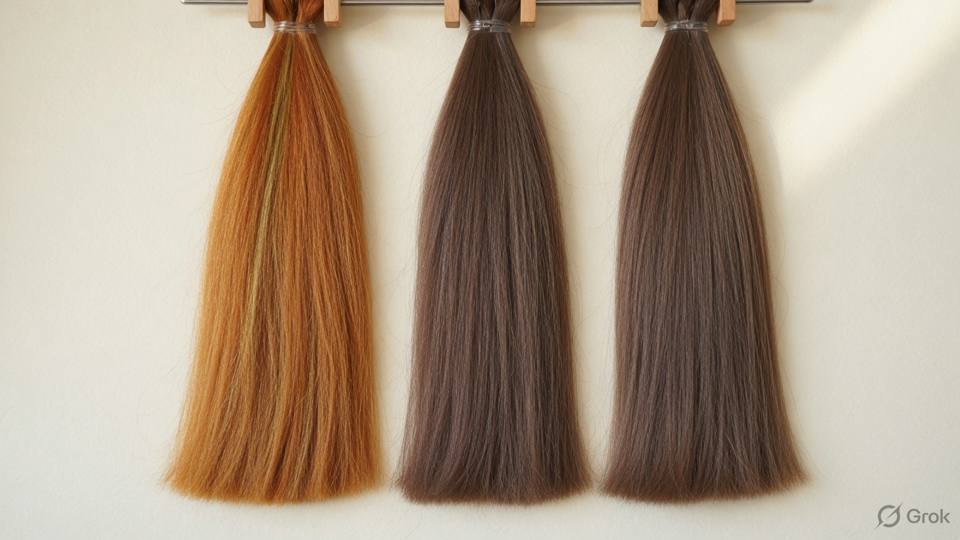
Assess, then plan the visits
Correction begins with a diagnosis, not a formula. You need four readings: the natural level at the root, the artificial level and tone on the mid-length and ends, the porosity and elasticity of each zone, and the history of every product that has been on the hair. Henna, metallic salts, black box dye, colour remover, and repeated lightener each leave a different signature. Ask for dates, not just products. A black dye applied three weeks ago behaves differently from one applied three years ago, even if the client describes both as black. The diagnosis is the plan, and a plan built on a guess is a plan that fails in the chair.
Correction is a sequence of visits, usually two or three, spaced two to four weeks apart. Removing artificial pigment, repigmenting the exposed warmth, and applying the target shade are three different chemical jobs, and stacking them in one sitting is how hair gets destroyed. Between visits, the hair needs time to settle, and the client needs time to see the intermediate result. Tell the client the number of sittings and the approximate time for each before the first bowl is mixed. A correction quoted as a single appointment is either a small correction or a promise that will not survive the first rinse.
Plan the visits around the client's calendar, not around the salon's empty slots. If the client has an event in two weeks, the honest plan may be to reach a wearable intermediate tone before the event and finish the correction afterwards. Do not compress two stages into one week because the date is close. Hair that has been through a colour remover needs time before lightener, and hair that has been lightened needs time before a repigment, even when the brand does not state a minimum interval. Use the conservative interval and explain why. The client will remember the result, not the wait.
Build refusal into the assessment. If the hair fails the elasticity test, feels gummy when wet, or breaks at the mid-length, the plan starts with a cut and a repair period, not with correction. If the scalp has broken skin or a rash, no colour today. If the client reports a previous reaction to colour, black dye, or black henna, no colour at all, and a referral to a doctor. These are not obstacles to negotiate around. They are the boundary between a service and an injury, and the colourist who holds the boundary is the one the client trusts with the next visit.
- 1. Read four things: natural root level, artificial mid-length and end level, porosity and elasticity, and full product history.
- 2. Ask for dates of every colour, henna, metallic, and remover service, not just product names.
- 3. Plan 2 to 3 sittings, usually 2 to 4 weeks apart, and say the number before you mix.
- 4. Never stack removal, repigment, and the target shade in one sitting on damaged hair.
- 5. Sequence around the client's event: reach a wearable tone first, finish the correction after.
- 6. Stop and rebook if the hair fails elasticity, feels gummy, or breaks at the mid-length.
- 7. Refuse colour on broken skin, a rash, or a reported reaction, and refer to a doctor.
- 8. Write the diagnosis and the staged plan on the card so every visit follows the same map.
Salon example
Lata has been dyeing her hair black at home for six years and wants a level six caramel brown. Her root is a level two, her mid-length is a level one from build-up, and her ends are a level two with a greenish cast under daylight. The hair is coarse, the elasticity is fair, and the porosity is high at the ends but low at the root. The target is four levels away from the artificial colour and requires removing years of build-up. I explain that this is a three visit correction, not a colour service. Visit one removes what the manufacturer's remover can remove and stops at a dark warm brown. Visit two, four weeks later, lightens the mid-length carefully and tones to a level five. Visit three, four weeks after that, lifts the root to match and glazes the whole head to level six. She asks for it in one day for a family function. I say no, and show her the strand from the first test, which is already soft at the tip. She books the three visits.
Caution: Do not compress a three-stage correction into one week because of an event. The hair needs the interval, and a rushed correction usually ends in a cut.
Remove what you can, safely
Removal is the first chemical job, and there are two main tools: a colour remover, which shrinks the artificial dye molecules so they can be rinsed out, and lightener, which oxidises pigment. They do different things, and they are not interchangeable. Use the one the manufacturer's instructions and the diagnosis support. Never use both in one sitting, because the combination is unpredictable and the hair has already been stressed by the first process. If the remover leaves the hair at a dark warm level, that is a result, not a failure. The warmth is the natural pigment that was underneath, and it is the next stage's raw material.
Follow the remover's instructions exactly: the mixing, the application time, the rinsing, and any after-treatment. Some removers require a second application, and some require a specific shampoo or a waiting period before colour. Do not shorten the rinse, because residual remover in the hair can react with the next colour. Do not apply a permanent colour immediately after a remover unless the manufacturer says it is safe. The usual sequence is remover, rinse, dry, assess, and then either a colour at the same visit if the brand allows or a return visit. When in doubt, return visit. The rinse is the step most often rushed, and it is the step that decides whether the next colour behaves.
Lightener is the second tool, and it is used when the artificial pigment is already light enough to lift or when the remover has taken the hair as far as it will go. Apply it to the mid-length and ends first, keep it off the scalp where possible, and check from twenty minutes. Stop at the level the toner can handle, not at the level in the photo. If the hair feels gummy or stretches without returning, rinse immediately. Do not make a second pass on the same day to even out a patch. The patch is a note for the next visit, not a reason to push the cuticle further.
After removal, the hair is more porous than it was, and the colour that follows will grab. That is why the next step is often a repigment rather than the target shade. Assess the hair dry and wet, read the level and tone, and write down what the remover achieved. If the result is patchy, do not try to fix it with more remover on the same day. Plan the correction of the patch for the next visit, with a strand test that includes the patch itself. The client should leave with a truthful explanation of what happened, what the hair can take next, and when.
- 1. Choose either a colour remover or lightener for the first pass, and never both in one sitting.
- 2. Follow the remover's mixing, timing, rinsing, and after-treatment exactly as printed.
- 3. Do not apply a permanent colour straight after a remover unless the manufacturer permits it.
- 4. Rinse until the water runs clear, because residual remover can react with the next colour.
- 5. Apply lightener to mid-length and ends first, keep it off the scalp where possible, and check from 20 minutes.
- 6. Stop at the level the toner can handle, and rinse at the first sign of gummy or stretched hair.
- 7. Do not make a second lightener pass on the same day to even a patch; note it for the next visit.
- 8. Record what the remover or lightener achieved, because the next stage is built on that result.
Salon example
Pooja has a level three base with two years of dark brown box colour on the mid-length and ends, and she wants a level six warm brown. The artificial colour is a level three, the natural root is a level three, and the ends are porous. A colour remover is the first tool, because the artificial pigment is dark and the hair is not strong enough for a full lightener pass on the same day. I mix the remover as the manufacturer instructs, apply to the mid-length and ends, process for the stated time, and rinse until the water runs clear. The result is a level four warm brown with an orange cast at the ends, which is the natural pigment the remover exposed. I dry the hair, assess it, and explain that the next visit will lift the ends one level and tone to level six. I do not apply a permanent colour that day, even though the client asks, because the remover's after-treatment needs to finish and the hair needs to settle. She books the second visit for three weeks later.
Caution: Never combine a colour remover and lightener in one sitting. The reaction is unpredictable, and the hair has already been stressed by the first process.
Repigment, refill, and finish
Repigmenting is the step most corrections skip, and skipping it is why corrected hair looks hollow and fades in a week. When you remove artificial pigment, you expose the natural underlying warmth, and when you lighten, you remove some of that warmth as well. The target shade needs a base to sit on, or it reads thin and cool in a way that looks grey rather than brown. Repigment means applying the missing warm pigment before the target shade, at the level the hair has reached. It is a small, deliberate step, and it is the difference between a colour that lasts and a colour that washes out.
Refill is the same idea applied to porous mid-lengths and ends that have lost tone. A refill formula is usually warmer and slightly deeper than the target, applied to the porous zone for a short time before the target shade. It gives the cuticle something to hold, so the target does not grab unevenly. The refill is not a separate service the client books; it is a step inside the correction, and it should be on the card. If the ends are extremely porous, the refill may need a lower volume and a shorter time, and the target shade may need to be diluted. Test both on the strand before the head.
The finish is the target shade at the target level and tone, followed by a toner or gloss. Apply the target to the repigmented hair, develop for the brand time, rinse, and then tone if the result is warmer or cooler than intended. Do not use the target shade to do the repigmenting job, because a cool target on empty hair will look flat and will not cover the warmth evenly. If the correction is staged, the finish may be a gloss on the intermediate visit and the full target on the final visit. That is normal. The client should hear the word gloss and understand that it is a step, not the final colour.
Record every step, including the repigment formula, the refill, the target, the toner, and the timing. A correction without a record cannot be repeated, and the next colourist will not know what is underneath. The card should read like a recipe with times, because that is what it is. At the end, check the result in daylight, take a photograph for the client's file with permission, and explain the aftercare. Corrected hair is more porous, so it fades faster and needs a gloss sooner. Say that, book the gloss, and give the client a realistic date for the next colour.
- 1. Repigment before the target shade whenever artificial or natural pigment has been removed.
- 2. Match the repigment to the level the hair reached, not to the target level.
- 3. Refill porous mid-lengths and ends with a warmer, slightly deeper formula for a short, timed application.
- 4. Test the refill and the target on the strand, especially on very porous ends.
- 5. Do not use a cool target shade to do the repigmenting job, because it will read flat and hollow.
- 6. Finish with a toner or gloss, and check the result in daylight before the client leaves.
- 7. Record the repigment, refill, target, toner, and times, so the correction can be repeated.
- 8. Book a gloss at 4 to 6 weeks, because corrected hair is more porous and fades faster.
Salon example
Naina has been lightened to a level eight over three visits, and the mid-length is now a pale, hollow blonde that fades to grey within ten days. She wants a level seven honey blonde that holds its tone. The hair is porous at the mid-length and the ends, and the cuticle is rough. The target shade alone would grab at the ends and look thin in the middle. I mix a repigment at level seven with a gold base, apply it to the mid-length and ends for eight minutes, rinse, and then apply the target level seven honey with 10 volume for fifteen minutes. The result is a warm, solid level seven that reads honey in daylight rather than grey. I finish with a gloss at the same level, check the ends at five minutes, and book a gloss at four weeks. The card records the repigment, the target, and the end timing, because without the repigment the next visit would repeat the hollow result. She also asks whether the honey will last through the summer, and I explain that porous hair fades faster, so the four week gloss is part of the plan rather than an extra.
Caution: Do not skip the repigment on porous, lightened hair. The target shade will look hollow, fade to grey, and the client will assume the colour was wrong.
This is a Nandu Nai textbook. It is a private brand book, not a government licence, and it does not give the right to give medical treatment.