
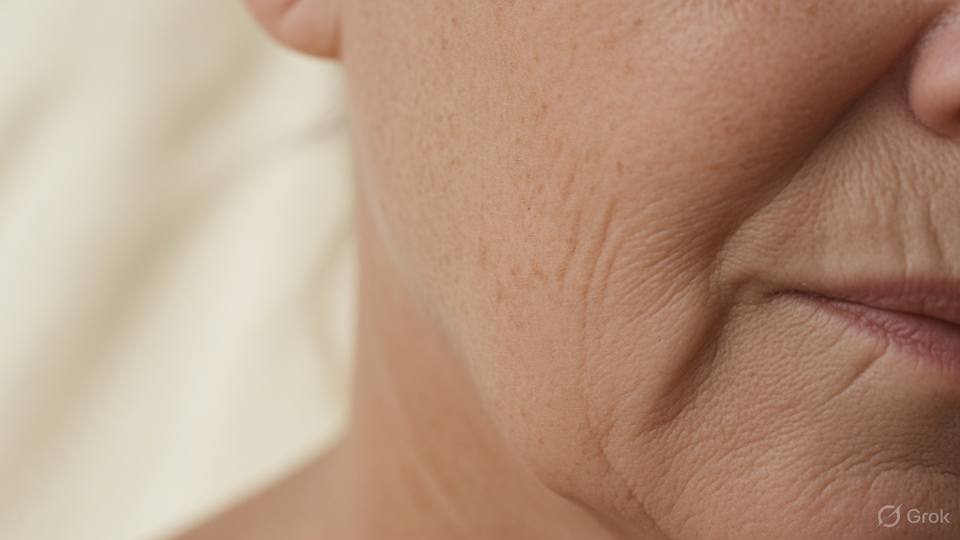
What changes with age and what a salon can do
With age, the skin makes less collagen and elastin, the proteins that give it bounce and support. The outer layer can hold less water, and the surface may look rougher or duller. Pores may appear larger because the skin around them loses firmness, and fine lines form where repeated movement meets thinner skin. Sun exposure accelerates most of these changes, which is why a client who protected their skin for years often looks calmer than one who did not. A salon cannot reverse the process, and a therapist should not imply that it can. What a salon can do is support hydration, protect the barrier, teach sunscreen, and guide a slow cosmetic routine that improves the look of texture over weeks.
The consultation should separate the concerns the client names. A client may say they want to look younger when they mean dull skin, visible pores, or a specific line. Ask what they see in the mirror and what they would like to change first. Look at texture, pores, tone, and firmness, and note the areas that bother them. Ask about sun history, smoking, sleep, and weight change, because these affect the skin and the plan. Ask about their routine and how much time they will give it. The therapist should not promise to remove wrinkles or restore a younger face. An honest plan targets texture and a brighter look, with a review at six to twelve weeks.
The sun is the largest modifiable factor. Daily broad-spectrum sunscreen protects the collagen that remains and reduces the deepening of marks and lines. A client who will not use sunscreen should not be started on a retinoid, because the combination of increased turnover and unprotected sun is a poor trade. Smoking, poor sleep, and a harsh routine also show on the skin, but the therapist should raise them without lecturing. The aim is to find the one or two changes the client will actually make. A plan built on shame is abandoned quickly. A plan built on a realistic morning and a clear review is more likely to survive the first month.
The salon's role is support, not repair. Gentle cleansing, hydration, a calming mask, and a light massage on an intact barrier can improve comfort and glow. A therapist should avoid aggressive peeling, strong heat, and anything that leaves the skin red for hours. Those services may produce a temporary tightness that clients mistake for progress, but they raise the risk of irritation and pigment, especially on deeper skin. The plan should be paced like the rest of the book: one active, one review, and a clear stop list. The client should leave knowing what the salon will do, what only time and genetics can do, and what a doctor may offer if the concern is medical.
- 1. Ask which concern bothers the client most: texture, pores, tone, or lines.
- 2. Look at the skin in daylight and note texture, pores, and firmness by area.
- 3. Ask about sun history, smoking, sleep, and previous treatments.
- 4. Ask how much time the client will give a routine on a busy day.
- 5. Explain that sunscreen protects the collagen that remains.
- 6. Offer hydration and calming care rather than aggressive peeling.
- 7. Choose one active for texture and leave the rest for later.
- 8. Set a review at six to twelve weeks with photographs and honest language.
Salon example
A fictional client, Vandana, age forty-nine, asked for a treatment that would remove the lines around her eyes before her son's wedding. The therapist listened, then asked what she noticed first in the mirror. Vandana said her skin looked dull and her pores seemed larger, and the lines were part of a bigger worry about looking tired. The therapist explained that a salon could improve hydration and the look of texture but could not remove the lines, and that sunscreen mattered more than any serum. They built a plan with a mild cleanser, a moisturiser, a broad-spectrum sunscreen, and a cosmetic retinoid introduced slowly. Vandana also chose a hydrating service before the wedding instead of a peel. At the eight-week review her skin looked brighter and the pores were slightly less visible. The lines were still there, and she said she minded them less because the rest of her skin looked calmer. The therapist wrote down what had changed and what had not, so the next conversation would not drift into a promise about wrinkles, and Vandana signed the note to show she had understood the limit.
Caution: Do not promise to remove wrinkles or restore a younger face, and do not sell a peel package as an aging cure.
Retinoid pace
A cosmetic retinoid is one of the better-supported ingredients for the look of texture, pores, and fine lines, but it is also one of the most common causes of irritation. The pace matters more than the product name. For a beginner, a pea-sized amount for the whole face, at night, two nights a week, is a sensible start. Apply it to dry skin, avoid the eyelids, the corners of the nose, and the corners of the mouth, and follow with moisturiser if the skin is dry. Do not use a strong acid or a scrub on the same night. The first weeks may bring dryness, flaking, and a temporary purge of small bumps. That is not a reason to quit immediately, but it is a reason to slow down.
The build should be gradual. After two calm weeks at two nights, the client may move to three nights if the skin is comfortable. After another two calm weeks, they may try alternate nights. Some clients never need more than three nights a week, and that is fine. The goal is tolerance, not a maximum frequency. If the skin stings, flakes heavily, or looks red and tight, reduce the frequency or pause for a few nights and use only cleanser and moisturiser. Do not add a second active to compensate. Do not apply a thicker layer, because more product does not mean a better result and can increase irritation around the folds of the face.
Some clients should not start a retinoid in the salon at all. A client who is pregnant, planning pregnancy, or breastfeeding should use one only if their doctor approves a specific product. A client with a broken barrier should repair first. A client who will not use sunscreen should not start. A client on a prescription retinoid or oral isotretinoin should not be given a cosmetic retinoid on top, and the therapist should not adjust the prescription. Tretinoin and oral isotretinoin are prescription treatments and are outside this role. If the client asks for them, explain the boundary and refer. The salon can support the basic routine while the doctor manages the medical part.
The review should ask about stinging, flaking, and new spots, and should look at the skin before the next application. A purge in the first weeks can be normal, but a painful rash, swelling, or a spreading redness is not. The therapist should write the nights, the amount, and the start date on the plan card. If the client misses nights, do not double up the next day. If the client wants faster results, explain that texture changes usually appear over eight to twelve weeks and that fine lines soften slowly, if at all. The honest pace protects the barrier and makes the result easier to judge. A client who stays at two nights for a month is doing the plan correctly, not falling behind.
- 1. Start with a pea-sized amount for the whole face, at night, two nights a week.
- 2. Apply to dry skin and avoid the eyelids, nose corners, and mouth corners.
- 3. Follow with moisturiser if the skin feels dry.
- 4. Do not use a strong acid or scrub on the same night as a beginner.
- 5. Build to three nights, then alternate nights, only after two calm weeks at each step.
- 6. Pause and use cleanser and moisturiser only if the skin stings or flakes heavily.
- 7. Do not start in pregnancy or breastfeeding unless the client's doctor approves that product.
- 8. Do not recommend tretinoin or oral isotretinoin; refer for the medical option.
- 9. Review at eight to twelve weeks and change one thing at most.
Salon example
A fictional client, Aakash, age forty-two, wanted to start a retinoid every night because a friend had recommended it. The therapist explained the pace and wrote two nights a week on a card. Aakash used a pea-sized amount on Monday and Thursday, with moisturiser on top. In the second week his skin felt tight and slightly flaky. He wanted to stop, but the therapist suggested reducing to one night a week and adding a thicker moisturiser rather than quitting. The flaking settled. After two calm weeks he returned to two nights, then three. At the twelve-week review the texture on his cheeks looked smoother and the pores were less obvious. The fine line on his forehead was still visible. Aakash said he had expected a new face and was relieved that the plan had not irritated his skin. The therapist kept the same frequency and did not add a second active. She also asked him to keep the card on his bedside table, because he had forgotten two nights in the first month, and to mark each night with a pen so the pattern was visible.
Caution: Do not start a retinoid in pregnancy or breastfeeding without the doctor's approval, and never supply tretinoin or oral isotretinoin.
Moisturiser and optional peptides
A moisturiser is not a failure of ambition. It supports the barrier, reduces water loss, and makes an active easier to tolerate. For dry or aging skin, a formula built on ceramides, glycerin, or cholesterol is a sensible choice. Humectants such as glycerin pull water into the outer layer, emollients soften the surface, and occlusives slow water loss. The label does not need to be complicated. A plain product with a short ingredient list is often better than a heavily fragranced cream with a long story. Apply it to slightly damp skin, morning and night, and use more on the nights with a retinoid. If the skin is oily, a lighter lotion or gel cream may be enough. The right moisturiser is the one the client will use consistently.
Peptides are an optional support, not a treatment. They are short chains of amino acids used in cosmetic formulas, and some may support the look of firmness and texture over time. The evidence is modest, and the therapist should not oversell them. If a client wants to add one, it can go in a serum in the morning or at night, but it should not replace sunscreen or a retinoid. It should not be stacked with several other new products in the same week. Peptides are expensive, and a client on a budget may get more value from a good sunscreen and a simple moisturiser. Say that plainly. Honesty about relative value is part of professional advice, not a sales obstacle.
Niacinamide is another useful support. It is often used at two to five per cent in a serum or moisturiser, and it can help the look of pores and support the barrier. Some clients flush at higher strengths, so a lower start is sensible. Vitamin C in the morning under sunscreen can support the look of uneven tone, but it should not be used on a broken barrier. These are optional layers, not requirements. The core plan remains cleanser, moisturiser, sunscreen, and a retinoid if the client wants one and can tolerate it. A routine with four reliable steps is better than eight products used twice and abandoned. The therapist should help the client subtract before adding.
The claims around aging deserve scepticism. Collagen drinks, powders, and teas are not a treatment for skin aging, and the evidence is weak. A collagen molecule in a drink is digested like any other protein; it is not delivered intact to the face. If a client asks, say that the evidence is weak and that sunscreen and a retinoid matter more. Do not rank a supplement as a plan. Do not promise to remove wrinkles, lift the face, or restore volume. The honest outcome is a calmer, more hydrated look, slightly smoother texture, and a slower visible change in fine lines. That is worth having, and it is more likely to be delivered if the therapist does not exaggerate. The client should leave with a plan they understand and a review date that keeps the conversation honest.
- 1. Choose a plain moisturiser with ceramides, glycerin, or cholesterol for dry skin.
- 2. Apply it to slightly damp skin, morning and night.
- 3. Use a lighter lotion or gel cream if the skin is oily.
- 4. Add more moisturiser on the nights a retinoid is used.
- 5. Treat peptides as optional support, not a treatment or a promise.
- 6. Use niacinamide at a typical two to five per cent and start lower if the skin flushes.
- 7. Put vitamin C in the morning under sunscreen, not on a broken barrier.
- 8. Do not rank collagen drinks, powders, or teas as a skin treatment.
- 9. Review the routine and remove what the client is not using.
Salon example
A fictional client, Nandini, age fifty-three, brought a collagen drink, a peptide serum, a niacinamide serum, and a retinoid to her appointment. She used all of them most days and still felt her skin was dry. The therapist asked her to lay the products on the table and talk through her week. Nandini was using the retinoid every night, the peptide serum in the morning, and the collagen drink at breakfast. Her skin was flaky and her routine took twenty minutes. The therapist stopped the retinoid for two weeks, kept a mild cleanser, a ceramide moisturiser, and sunscreen, and paused the peptide serum. The collagen drink was left alone but not ranked as a treatment. After two weeks the flaking had settled. The retinoid was restarted twice a week, and the peptide serum was added later on alternate mornings. Nandini said the simpler routine was easier to keep and her skin felt less tight. She kept the collagen drink out of habit but stopped describing it as her treatment, and the therapist noted the change without making an issue of it.
Caution: Do not claim that a collagen drink, powder, or tea treats aging, and do not promise to remove wrinkles.
This is a Nandu Nai textbook. It is a private brand book, not a government licence, and it does not give the right to give medical treatment.