
Why Fitzpatrick IV-VI needs a different pace
The Fitzpatrick scale describes how skin responds to sun. Types IV to VI usually tan easily, may burn less obviously, and have a higher risk of pigment change after injury or inflammation. That does not mean the skin is stronger. It means the signs of damage can be less visible at first and the pigment response can be more persistent. A therapist should assess the skin type, ask about previous reactions, and look for keloids or dark marks after cuts and spots. The same active or peel that suits a lighter skin type may be too aggressive. The plan should be built around the individual response, not a standard package or a trend from another country.
Darker skin can also show redness differently. Inflammation may look purple, grey, or brown rather than bright red, so a therapist who only looks for redness can miss it. Swelling, warmth, and pain are useful signs. The client may know their skin better than the chart does, so ask what happened after previous facials, waxing, or laser. A history of dark marks after a burn is a warning to go slowly. The salon should avoid strong heat, aggressive scrubbing, and high-strength peels. Gentle cleansing, moisturiser, and sunscreen remain the base. The aim is improvement without a new pigment problem, even if that means a slower visible change than the client hoped for.
In many Indian salons, Fitzpatrick IV to VI is the default rather than the exception. The plan should assume pigment risk unless the history says otherwise. That means testing a new active on a small area for two weeks, keeping heat low, and avoiding a strong peel stacked with a retinoid. It also means explaining that a mark may take months and that a product which causes redness is not a sign of progress. The therapist should not use a lighter-skinned client's result as a promise. Skin responds to its own history, its own barrier, and its own exposure. A plan that respects that is more likely to produce a calm result than one built on a generic before-and-after photograph.
The default pace is slower and the documentation is more detailed. Record the Fitzpatrick type, the products used, the previous reactions, and the areas treated. Take photographs with consent and use the same light. Ask about the client's work, because heat, sun, and friction vary by occupation. At each visit, judge warmth, swelling, and texture as well as colour. If the skin is warm and tight after a service, the next service goes gentler. If a mark appears after a treatment, stop and review before adding anything else. The therapist should be willing to say that the salon will not do a particular treatment on this skin, and should offer a safe alternative in the same visit.
Pigment risk is not a reason to refuse all care. It is a reason to choose the care carefully. Gentle cleansing, hydration, sunscreen, and a single well-tolerated active can improve texture and tone without provoking a mark. The key is to avoid the combination of heat, friction, and strong acids that pushes the skin into inflammation. A therapist who understands this can serve deeper-skinned clients well, provided the promises stay honest and the referral route is clear. The client should leave knowing that the pace is deliberate, not neglectful, and that the salon will stop if the skin signals trouble.
- 1. Ask about previous reactions after facials, waxing, laser, and injuries.
- 2. Record the Fitzpatrick type and the areas treated in the client notes.
- 3. Look for purple, grey, or brown inflammation as well as redness.
- 4. Judge irritation by warmth, swelling, and texture, not colour alone.
- 5. Avoid strong heat, aggressive scrubs, and high-strength peels.
- 6. Test every new active on a small area for at least two weeks.
- 7. Photograph progress with consent and consistent lighting.
- 8. Offer a gentle alternative when a treatment is not safe for the skin.
Salon example
A fictional client, Zoya, age twenty-eight, had Fitzpatrick type V skin and wanted a peel for uneven tone. She had a history of dark marks after waxing and after an insect bite. The therapist explained that her skin might react to a strong peel with more pigment, even if a friend with lighter skin had a good result. Zoya was disappointed because she wanted a visible change before a party. The therapist offered a gentle cleanse, a hydrating mask, and a sunscreen review instead. No peel was performed. Zoya agreed to try the gentle plan for six weeks and to photograph the area with consent. At the review the tone was slightly more even and no new marks had appeared. The therapist kept the same approach and added nothing. Zoya said the change was smaller than she had imagined but she trusted it more, because her skin had not reacted. She also asked for a written note about the peel she had wanted, so she could discuss it with a doctor rather than another salon, and she kept the note in her bag for the appointment.
Caution: Do not assume deeper skin is tougher skin, and do not use a lighter-skinned result as a promise.
Patch testing a new active
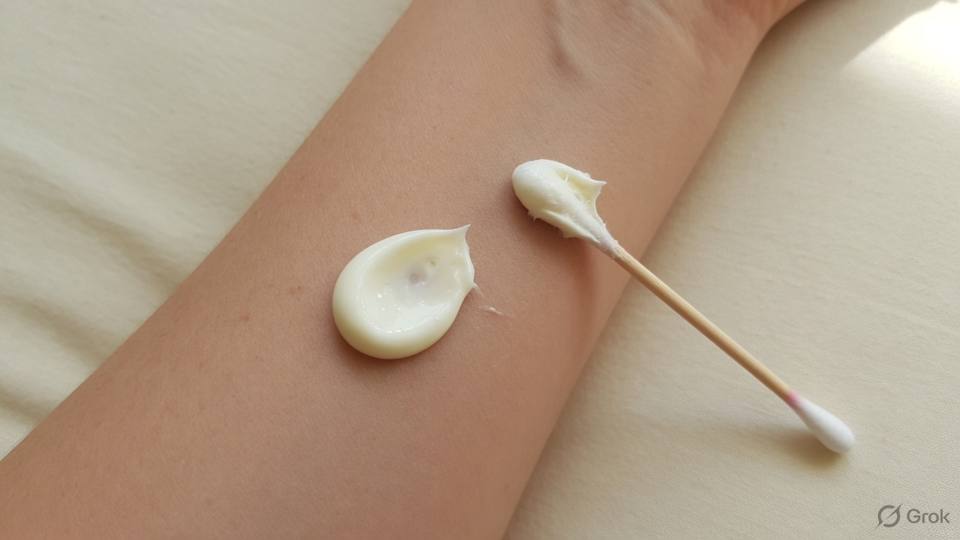
A patch test is a small, controlled introduction. Choose a small area, often behind the ear or on the jaw, and apply the product as directed. Use only one new product at a time. Leave the area alone for forty-eight to seventy-two hours and check for redness, itching, swelling, or a burning feeling. A mild tingling may be normal for some products, but pain is not. Record the product, the date, and the result. If there is a reaction, stop and do not apply it to the face. A patch test does not guarantee that a product will never cause a reaction, but it lowers the risk and gives the therapist a clear reason to say no.
The test area should be skin that the client can see and protect. The jaw is practical because it is easy to check, but a product can still transfer to the cheek. Behind the ear is discreet but harder to photograph. Choose based on the product and the client. Do not test a product on broken or sunburned skin. Do not test several products on the same day, because a reaction cannot be assigned to one. If the client uses a prescription product, ask the doctor before adding a cosmetic active. The therapist should write the result in the record and review it before the next application. A test that is not recorded is a test that will be repeated by mistake.
Two weeks is a better test for pigment-prone skin than two days. A short test can catch an immediate allergy, but irritation and pigment change may appear more slowly, especially with acids and retinoids. For a new active on Fitzpatrick IV to VI, use it on the jaw edge or the side of the neck for two to three nights, then pause and look. If there is no sting, swelling, or spreading redness, move to the full face at the lower end of the label's frequency. Keep the rest of the routine steady. Do not add a new cleanser, mask, or scrub during the test. The slower introduction is not indecision; it is the only way to know which product caused which change.
The client should understand what counts as a reaction. A brief tingle from an acid is common. A sting that lasts, a hot feeling, swelling, hives, or a rash is not. If a reaction starts, stop only the new product and keep the cleanser and moisturiser, so the skin can settle and the cause remains clear. Do not apply a second product to cancel the first. Do not use a steroid cream from the cupboard unless a doctor has advised it. If the reaction is severe, spreading, or comes with breathing difficulty, seek urgent medical help. The therapist should document the reaction, the date, and the advice given, and should not retest the same product without medical guidance.
- 1. Choose one new product and one small test area.
- 2. Apply it as directed on the jaw edge or behind the ear.
- 3. Leave the area alone for forty-eight to seventy-two hours.
- 4. Check for redness, itching, swelling, or a burning feeling.
- 5. For pigment-prone skin, extend the test to two to three nights and a two-week review.
- 6. Keep the cleanser, moisturiser, and sunscreen unchanged during the test.
- 7. Record the product, date, area, and result.
- 8. Stop the product if there is a reaction and do not apply it to the face.
Salon example
A fictional client, Ishaan, age thirty, wanted to try a new exfoliating serum. The therapist applied a small amount to his jaw and asked him not to use anything else on that area. Ishaan was impatient and wanted to apply it to his whole face that night. The therapist explained that the test would be wasted if he did, and that a reaction on the jaw was easier to manage than a reaction on both cheeks. Two days later the jaw area was slightly red and itchy. The product was not used on the face. The reaction settled with a mild moisturiser and no active. A different product was tested two weeks later and tolerated. Ishaan admitted that he would have applied the first serum everywhere and blamed the salon if his face had reacted. The record showed the test date, the area, and the result, and the therapist used it at the next review. Ishaan also agreed to wait a full week before trying the second product, which gave the first reaction time to settle completely before another variable was introduced.
Caution: A patch test is not a guarantee, and a reaction means stop the product rather than apply less of it.
No strong peel stacked with a retinoid
A strong peel and a retinoid both increase skin turnover and can irritate the barrier. Using them close together raises the risk of redness, peeling, pain, and post-inflammatory pigment, especially in Fitzpatrick IV to VI. The salon should ask what the client is using before any peel, including prescription products. If a client is on a retinoid, do not perform a strong peel on the same day or in the same week. The safe choice may be to skip the peel, keep gentle care, and let the skin settle. The therapist should not adjust a prescription or tell the client to stop it without medical advice. The question is not whether the peel is mild on the label, but whether this skin is ready for it today.
Timing is not the only issue. The strength of a peel, the number of layers, the pH, and the aftercare all affect the result. Salon staff should not invent a peel protocol or combine acids to make a stronger product. If the salon offers peels, it should follow a trained protocol and a clear consent process. The client should know the expected downtime and the signs that need medical care. A strong peel is not a routine add-on to a facial. It is a treatment with real risks. When the question is beyond the salon's training, the answer is to refer. A refused peel is easier to explain than a burn that takes months to fade.
The same logic applies to other combinations. Do not layer a salon acid with a home retinoid on the same day, and do not add a scrub after either. Do not use a strong peel before a wedding or a holiday, because the skin may be red or peeling when the client wants to look calm. Do not assume that a client who tolerated a peel last year will tolerate one now, because the barrier, the weather, and the products at home may have changed. Ask what was used in the past week, not only the past month. Write the answer on the card. If the client is unsure, postpone the peel rather than guess. The safe service is the one the skin can recover from.
Aftercare is part of the treatment, not an afterthought. A client who has had a peel needs gentle cleansing, a plain moisturiser, and sunscreen, with no actives until the skin has settled. Give written instructions and a contact route if something goes wrong. Do not send the client home with a bag of new products. Do not tell them to scrub off the peeling skin. If the skin becomes hot, swollen, blistered, or darker, they should seek medical advice promptly. The salon should record the peel, the strength category, the aftercare, and the review. A peel that is documented and followed up is safer than one that ends at the door, and the record protects the client if another clinician needs to take over.
- 1. Ask what the client used in the past week before any peel.
- 2. Ask specifically about retinoids, prescription products, and acids.
- 3. Do not perform a strong peel on the same day or week as a retinoid.
- 4. Do not combine acids or invent a stronger peel protocol.
- 5. Follow a trained protocol and obtain written consent.
- 6. Explain the downtime and the signs that need medical care.
- 7. Give written aftercare with cleanser, moisturiser, and sunscreen only.
- 8. Record the peel, the aftercare, and the review date.
Salon example
A fictional client, Tanvi, age thirty-four, booked a peel and mentioned at the start that she had used a retinoid the night before. The therapist stopped the booking. Tanvi was annoyed because she had taken time off work. The therapist explained that the combination could cause a burn and dark marks, especially on her skin type, and that the salon would not take that risk for a service she could have later. She offered a gentle cleanse and a hydrating mask instead, and asked Tanvi to return after a break from the retinoid if she still wanted a peel. Tanvi agreed to the gentle service. Two weeks later she returned with a note about her retinoid plan from her doctor. The salon scheduled a consultation rather than a treatment. The therapist documented the decision and the alternative. The peel was postponed until the skin was ready, and Tanvi said she appreciated the refusal once she understood the reason. The therapist also gave her a card listing what to avoid before a peel, including a home retinoid, a scrub, and a strong vitamin C product, so the next booking would start from a known baseline.
Caution: A recent retinoid is a reason to postpone a strong peel, not a reason to use a milder acid without checking.
This is a Nandu Nai textbook. It is a private brand book, not a government licence, and it does not give the right to give medical treatment.