
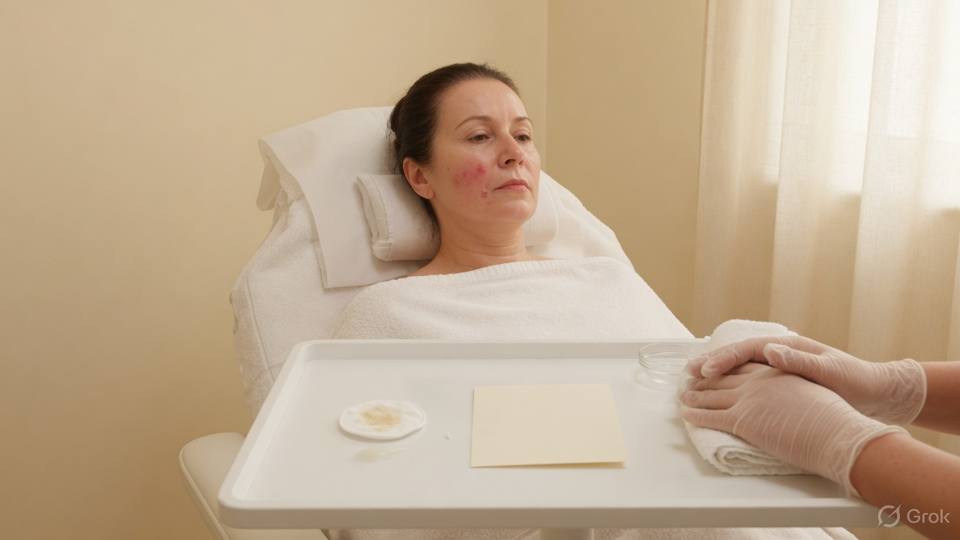
Same-day referral signs
Some signs need a doctor the same day, not a salon appointment next week. A mole that is changing in size, shape, colour, or border needs assessment. A spot that bleeds without being scratched, or a sore that does not heal, also needs medical review. A painful, rapidly growing cyst, a lesion with spreading redness, or a fever with skin symptoms should not wait. So should swelling, hives, or difficulty breathing after a product. A child with a skin problem should be referred to a doctor rather than treated with adult products. The salon should keep a short list and use it without hesitation. The list is not a diagnosis; it is a trigger for action.
The therapist does not need to know the diagnosis to act. The key is to recognise that the situation is outside salon scope and to say so clearly. A client may resist because of cost, fear, or a previous bad experience. Listen, explain the reason, and offer practical help such as writing the concern down or suggesting a clinic. Do not apply a product to a lesion that is bleeding, oozing, or painful. Do not cover a changing mole with makeup and send the client home. Document the advice and the time. If the client declines, record that too. Safety comes before the service, and a same-day referral is not an overreaction when the sign is on the list.
A child deserves special care. Children's skin is thinner, their products are different, and a concern that looks minor can change quickly. A salon should not perform an adult facial, peel, or active treatment on a child. If a parent brings a child with a rash, a mole, a bump, or a changing spot, refer to a doctor the same day. The same applies to a teenager who wants an acne treatment: the basics can be discussed, but active treatment and any prescription question belong with a doctor or an esthetician working within their scope and local rules. The therapist should be kind to the parent, who may be worried, and should not imply that the salon can handle it because the child is young.
Some product reactions are emergencies. Swelling of the lips, tongue, or throat, difficulty breathing, or fainting after a product needs urgent medical help, not a salon booking. Call emergency services according to local practice and stay with the client. For a spreading rash, hives, or facial swelling without breathing trouble, stop all products and send the client to a doctor the same day. Do not apply another product to calm the reaction, and do not suggest an antihistamine unless the client's doctor has advised one. Record what was used, when, and how much, without guessing. The salon should have a written emergency plan and a first-aid kit, and staff should know where the nearest clinic is. Preparation turns panic into a clear sequence.
The same-day list should be posted where staff can see it, not buried in a folder. It should include a changing mole, a bleeding or non-healing spot, a painful deep lump, spreading redness with fever, a severe product reaction, a child with a skin concern, and any lesion the therapist cannot describe confidently. The list should also say what to do: stop the service, give the client a written note, and record the advice. Review the list at staff meetings so new employees learn it before they are alone with a client. A salon that refers well is not admitting weakness. It is showing that it knows where its work ends and medical care begins.
- 1. Refer a changing mole or a bleeding spot the same day.
- 2. Refer a painful, rapidly growing lump or a spreading red area.
- 3. Refer a non-healing sore, a new dark lesion, or an uncertain lesion.
- 4. Refer any child with a skin concern rather than treating with adult products.
- 5. Refer swelling, hives, or a spreading rash after a product the same day.
- 6. Call emergency services for breathing difficulty, throat swelling, or fainting.
- 7. Stop the service and do not apply makeup over a suspicious lesion.
- 8. Record the sign, the advice, and the time in the client notes.
Salon example
A fictional client, Arjun, age fifty-two, came for a facial and mentioned a small spot on his temple that had bled twice while shaving. The therapist looked at the spot and saw that it was irregular and darker than the surrounding skin. She did not apply any product. She explained that a bleeding spot needed a doctor and wrote the location on a card for him. Arjun said it was probably nothing and asked her to continue. The therapist declined and repeated the advice, and offered to move the booking to another day. He left annoyed. Two weeks later he returned to thank her. His doctor had removed the spot for testing and told him it had been worth checking. The salon had lost one facial but gained a loyal client. The therapist recorded the referral, the date, and the client's initial refusal, and she added the case to the next staff meeting. She also wrote a short note for Arjun to take to the doctor, describing when the spot had first bled, how it had changed, and that he had no pain, so the doctor had a clear history.
Caution: Do not treat a bleeding or changing lesion as a cosmetic problem or cover it with makeup.
How to refer clearly
A good referral is specific. Say what you saw, how long it has been there, and why it needs medical review. Avoid naming a disease or guessing at a diagnosis. Give the client a written note with the location and the date. Suggest a dermatology clinic or a doctor the client already trusts, but do not insist on one. Explain what the salon will do in the meantime: gentle cleansing, moisturiser, and sunscreen, with no active on the area. Ask the client to return after the medical visit if they want to continue salon care. A clear referral is a professional handover, not a rejection, and the client should feel helped rather than dismissed.
The language matters. Use plain words: a spot that has changed, a sore that has not healed, a lump that is deep and painful, a rash that is spreading. Do not say it is definitely harmless, and do not say it is definitely serious. Do not use a disease name to sound expert. The therapist can say that the sign is outside what a salon can safely assess and that a doctor can look more closely. If the client asks what it might be, say that only a doctor can answer that after an examination. This honesty protects the client from false reassurance and protects the therapist from making a claim that is not theirs to make.
Follow-up matters. If the client does not go, ask again at the next contact without pressure. If they do go, ask what the doctor advised and record it with permission. Do not change a medical plan. If the doctor prescribes a product, the salon can support the routine around it, but should not add strong actives without advice. The therapist should also know local emergency signs: swelling of the lips or throat, difficulty breathing, or fainting need urgent help, not a salon booking. Keep the language simple and the tone calm. The client is more likely to act when the reason is clear and when the next step is practical rather than vague.
A referral should include the safe basics so the client is not left with nothing. Write down a mild cleanser, a plain moisturiser, and sunscreen. Say what not to do: do not pick, scrub, apply heat, or cover the area with a thick product. Give a review date after the medical visit. If the client is anxious, acknowledge it without promising an outcome. If the client refuses, record the refusal and repeat the advice at the next visit. The salon's duty is to inform and document, not to force. A calm, specific referral is one of the most professional acts in the industry, and it often earns more trust than a treatment that should not have been done.
- 1. Describe what you saw, where it is, and how long it has been there.
- 2. Do not name a disease or guess at a diagnosis.
- 3. Give a written note with the location and the date.
- 4. Suggest a clinic or doctor without insisting on one.
- 5. Explain what the salon will not do and why.
- 6. Give the safe basics: cleanser, moisturiser, and sunscreen.
- 7. Ask the client to return after the medical visit and record the outcome.
- 8. Record a refusal and repeat the advice at the next contact.
Salon example
A fictional client, Leela, age forty-eight, had a red, scaly patch near her nose that had not healed for a month. She wanted the salon to cover it with makeup for a wedding. The therapist explained that a non-healing patch needed a doctor and that makeup could irritate it. She wrote a short note describing the patch and its duration, and suggested a dermatology clinic. Leela was worried about the wedding photographs. The therapist helped her choose a gentle sunscreen and showed her how to apply makeup around the area, not on it. She also gave her a mild cleanser and a plain moisturiser, and asked her to return after the wedding. Leela saw the doctor the following week. The patch was treated, and she returned to the salon with a medical plan. The therapist recorded the referral, the advice, and the date, and kept the skincare gentle while the doctor's plan continued. Leela later said the written note made the appointment easier, because she could describe the patch without trying to remember the timeline, and the doctor asked fewer questions about when it started.
Caution: Do not diagnose a lesion, call it harmless, or promise that it will settle on its own.
No whitening promise
Skin colour is determined by melanin and genetics, and a salon cannot and should not promise to change it. Brightening products may reduce the look of uneven tone caused by sun or inflammation, but they do not turn darker skin into lighter skin. The word whitening is a warning sign. Products that promise rapid fairness often contain steroids, mercury, or unknown ingredients. They can cause thinning, acne, stretch marks, and severe pigmentation after stopping. The therapist should explain the difference between treating a mark and changing natural skin colour. Honesty here is not a sales loss; it is a safety requirement, and it is also a form of respect for the client's body.
Every client deserves a plan that respects their skin. Ask what result they want and why. Sometimes the real concern is acne, texture, or a specific mark, not overall colour. Address that concern directly instead of offering a fairness promise. If a client is using a whitening cream, advise stopping and seeing a doctor, especially if the skin is thin, shiny, or covered in fine hair. Do not sell a replacement cream from an unlabelled jar. Keep the conversation respectful and free of judgment. The salon's job is healthy-looking skin and honest expectations, not a beauty standard built on colour. A client who feels heard is more likely to accept a realistic plan.
The language of the industry needs care. Avoid words such as fair, whitening, lightening, and brightening when they imply a change in natural colour. Prefer even tone, calm redness, fading of marks, and healthy-looking skin. If a product label uses a claim that the salon cannot support, do not repeat it in the consultation. Explain that a mark from acne or sun can fade over months with sunscreen and support, while natural skin colour stays. This distinction is simple and can be said in one sentence. It also gives the client a way to judge other offers, which is useful when they leave the salon and see an advertisement that promises more.
The refusal should come with an alternative. If the client wants lighter skin before a wedding, offer a plan for glow, hydration, and even tone, and explain that calm skin photographs well. If the client wants a mark gone, build a pigment plan with sunscreen and one active, and set a review at six to eight weeks. If the client is already using a fairness cream with signs of thinning or dark patches, refer and support the barrier in the meantime. Do not argue about beauty standards; the client did not invent them. Offer a professional standard instead: safety, honesty, and care that does not harm. That standard is the salon's real differentiator.
- 1. Do not promise to lighten natural skin colour or change a complexion.
- 2. Explain the difference between a mark and natural skin tone.
- 3. Ask what the client dislikes and address that concern directly.
- 4. Advise stopping an unlabelled whitening cream and seeing a doctor.
- 5. Do not sell a replacement cream from an unlabelled jar.
- 6. Use words such as even tone, calm redness, and fading marks.
- 7. Offer an alternative plan for hydration, texture, or pigment.
- 8. Record the concern and the plan without judgment.
Salon example
A fictional client, Saira, age twenty-four, asked for a whitening facial because she wanted lighter skin for her engagement. The therapist explained that the salon could work on uneven tone and texture but could not change her natural colour. Saira was upset and said other salons had promised results. The therapist did not argue. She asked what Saira disliked about her skin and learned that she was concerned about old acne marks on her cheeks. They built a plan with sunscreen, a gentle cleanser, and one supportive active later. No whitening product was used. Saira continued the routine and photographed the marks with consent. At eight weeks the marks were slightly lighter and her skin looked calmer. She said she felt more comfortable in photographs, not lighter. The therapist also explained why the other salons' promises worried her, and Saira said she would ask more questions next time. The plan card listed the sunscreen, the cleanser, and the review date, with no whitening product anywhere on it. Saira also asked her mother to stop buying fairness creams for her, which was a harder conversation than the facial.
Caution: Never promise a lighter skin colour, and never describe a harmful fairness cream as a beauty treatment.
This is a Nandu Nai textbook. It is a private brand book, not a government licence, and it does not give the right to give medical treatment.