
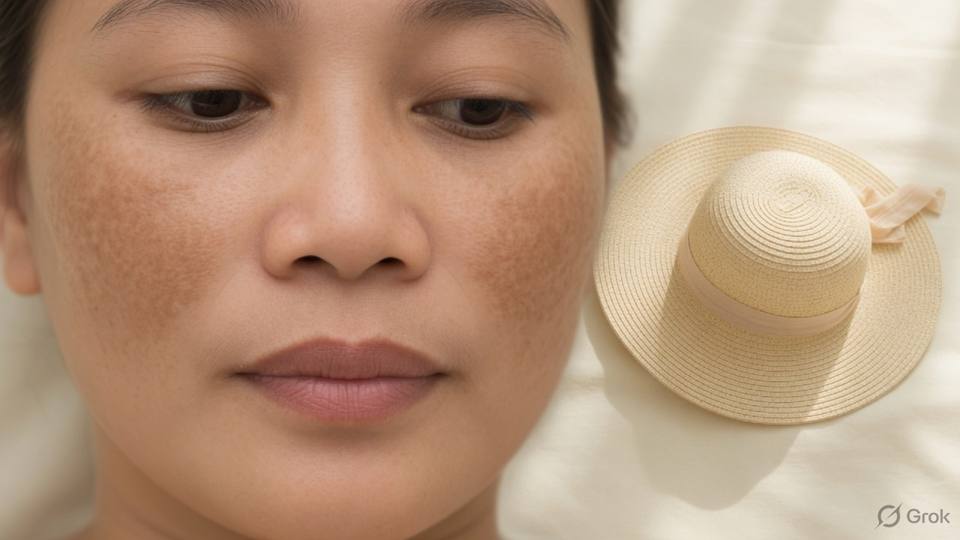
What melasma is
Melasma is a common pigment condition that usually appears as symmetrical brown patches on the cheeks, forehead, upper lip, or chin. On deeper skin the colour may look brown, grey, or bluish rather than pink. It is more common in women, particularly those with medium to dark skin, and it can run in families. Sun exposure, heat, hormonal changes, and some medicines can contribute. It is not contagious, it is not a sign of poor hygiene, and it is not a type of skin cancer. The patches may fade and return, which makes melasma a long-term condition rather than a quick fix. A salon therapist can support daily care and help the client avoid triggers, but should not claim to cure it.
The pattern is usually bilateral, but it can be uneven. Some clients notice it during pregnancy, after starting a hormonal contraceptive, or after a summer of outdoor work. Others cannot identify a trigger. The therapist should ask about sun, heat, and product history, and should look at the whole face rather than one patch. Melasma can coexist with post-inflammatory marks and with sun damage, and the client may confuse the three. A dermatologist can confirm the diagnosis, sometimes with a lamp or a scope. The salon should not treat every brown patch as melasma or every melasma as a simple cosmetic problem. Clear language prevents false hope and unnecessary treatment.
The consultation should include the questions that change the plan. Ask when the patches first appeared and whether they change with seasons, pregnancy, or a new medicine. Ask about outdoor work, cooking over a hot stove, long drives, and time in a sauna or steam room. Ask about family history and about previous peels or laser treatments. Ask whether the patches itch, burn, or bleed, because those symptoms point away from ordinary melasma. Ask what the client hopes for, and listen for the difference between covering the patches for an event and treating them for the long term. The answer decides whether the salon offers gentle care, a camouflage lesson, or a referral.
What the salon can do is modest and useful. It can teach daily sunscreen, shade, and a hat. It can keep the routine gentle and fragrance-free. It can avoid heat, friction, and strong peels. It can review the skin every three to four weeks and refer when the pattern changes or the client wants medical treatment. It can also help the client set a realistic goal: calmer, more even-looking skin with fewer flares, not a guarantee of one uniform colour. Melasma is often controlled rather than cured, and saying so early prevents the disappointment that leads clients to stronger and more dangerous products.
Melasma is not the same as a mark left by a single pimple, although the two can sit side by side. A post-inflammatory mark usually has a clear cause and a defined edge; melasma is often broader, symmetrical, and driven by heat and light. The therapist should describe what is visible and avoid naming a diagnosis with certainty. If the pattern is unclear, if only one side of the face is affected, or if there is scaling, tenderness, or a raised border, refer. A photograph can help the doctor, but the salon should not diagnose from it. The client should leave knowing what the salon will do, what it will not do, and when to return.
- 1. Ask when the patches appeared and whether they change with season or hormones.
- 2. Ask about pregnancy, hormonal contraception, and medicines.
- 3. Ask about outdoor work, cooking heat, saunas, and long drives.
- 4. Look at the whole face and describe the pattern in plain words.
- 5. Ask about itching, burning, bleeding, or a raised border.
- 6. Ask what the client wants: cover for an event or long-term care.
- 7. Do not confirm a diagnosis from a photograph or a single visit.
- 8. Refer when the pattern is unclear or the client wants medical treatment.
Salon example
A fictional client, Shalini, age thirty-nine, noticed brown patches on both cheeks after a holiday. She assumed the cause was a new face wash and asked the salon for a strong brightening facial. The therapist saw a symmetrical pattern across both cheeks and the upper lip, which had also appeared during her pregnancy years earlier. She did not promise that the facial would remove it. She explained that sun and heat could keep the patches active and that a dermatologist should confirm the diagnosis. Shalini was given a simple routine with sunscreen, a mild cleanser, and a moisturiser, and was advised to avoid direct sun and hot cooking steam. She booked a medical appointment. The salon offered only gentle care later, with no heat treatments and no peel. Shalini said she valued the honesty more than a quick facial, although she wished the answer were simpler. The therapist recorded the pattern, the referral, and the review date. Shalini also agreed to photograph her cheeks in the same window light each week, which gave the doctor a simple record of whether the patches were stable or changing.
Caution: Do not diagnose melasma from a single photograph, and do not promise that a facial will clear it.
Heat, steam, and peels
For melasma, heat is a common trigger. Steam, hot towels, hot oil treatments, sauna, and prolonged massage with warm tools can all make the skin flush and may worsen pigment. A deep peel is also risky: it can cause irritation, post-inflammatory pigment, or a rebound darkening, especially in deeper skin. The salon should avoid these treatments when melasma is known or suspected. A gentle cleanse, a cool compress if the client is overheated, and sunscreen are safer choices. The therapist should explain why the relaxing part of a facial is not always helpful for this condition. Comfort and safety can coexist, but the plan has to put pigment first.
Clients often expect a facial to include steam because it feels professional. The therapist can offer a cool, hydrating treatment instead and explain the reason. Do not use a hot steamer to open pores; pores do not open and close like doors, and the heat adds a trigger without cleaning deeper. Do not apply essential oils or strong scrubs to an active patch. Do not promise that a peel will lift the pigment. If a client has had a recent peel elsewhere and the skin is red, swollen, or darker, stop and refer. The salon record should note the decision. A short explanation now can prevent a long pigmentation problem later, and a client who understands the why is less likely to seek a stronger treatment elsewhere.
A peel is not a neutral service. The strength, the number of layers, the pH, and the aftercare all affect the result, and deeper skin carries a higher risk of pigment change. Salon staff should not invent a peel protocol, combine acids to make a stronger product, or use a medical peel without training and supervision. If the salon offers peels, it should follow a trained protocol, obtain consent, and explain the downtime and the signs that need medical care. For a client with melasma, the safer choice is usually no peel at all. The therapist should say that plainly rather than offering a mild peel and hoping. A calm service that protects the barrier is a better use of the appointment.
The service itself should be designed around cooling and hydration. Use tepid water, a gentle cleanser, and a mask at room temperature. Skip the steamer, the hot towel, and the warming massage. Keep the massage short and light if the barrier is intact, and avoid friction on the patches. Apply sunscreen at the end, including the ears and neck, and show the client how to reapply later. Ask what they use at home and remove any scrub, brush, or hot oil treatment. If the client wants a glow before an event, offer hydration and camouflage advice rather than heat and exfoliation. The result may be less dramatic in the chair, but it is less likely to leave a darker patch behind.
- 1. Skip steam, hot towels, sauna, and hot oil on the face.
- 2. Do not use a hot steamer to open pores; it adds heat without cleaning deeper.
- 3. Avoid a deep peel on known or suspected melasma.
- 4. Do not scrub, brush, or rub the patches.
- 5. Use tepid water, a gentle cleanser, and a cool or room-temperature mask.
- 6. Keep massage short and light, and avoid friction on the patches.
- 7. Apply sunscreen at the end and teach reapplication.
- 8. Stop and refer if the skin is red, swollen, or darker after a recent peel elsewhere.
Salon example
A fictional client, Nisha, age thirty-one, booked a glow facial before her sister's wedding. She had melasma on her forehead and cheeks and wanted the patches covered, not treated. The therapist explained that the standard facial included steam and a warm massage, which could make the patches darker. Nisha was disappointed because she had expected the full experience. The therapist offered a cool cleanse, a hydrating mask at room temperature, and sunscreen, with no steam and no peel. Nisha agreed. The therapist also showed her how to apply sunscreen around the hairline, where she often missed it, and suggested a hat for the outdoor ceremony. The facial was shorter than expected but comfortable. Two weeks later the patches had not darkened. Nisha booked the same gentle service again and asked for help with makeup that would not rub the skin. The therapist kept a note that heat was to be avoided at every visit. Nisha later said the cool facial felt strange at first but she did not have to hide her cheeks the next morning, which mattered more than the steam she had expected.
Caution: Steam and heat are not neutral for melasma, and a deep peel can make it darker.
Referral and long-term care
Refer a client with melasma when the patches are spreading, when the colour is changing quickly, when there is pain or itching, or when the diagnosis is uncertain. Also refer during pregnancy, when a client is planning pregnancy, or when a client wants medical treatment. A dermatologist can assess the pattern and discuss options that are not available in a salon. The salon can continue gentle cleansing, moisturising, and sunscreen support alongside medical care. The client should not be sent away with a vague instruction to avoid the sun. Give clear, practical steps and a review date. The referral should name what was seen, not a guessed disease, and it should be written in the record.
Long-term care is about consistency. Sunscreen every morning, shade during peak hours, a hat, and a gentle routine matter more than a dramatic weekly treatment. The client should know that melasma can return after improvement and that maintenance is normal. Avoid frequent changes of products, because each new active can cause irritation. Keep a simple record of what is used and how the skin responds. If a product causes stinging or redness, stop it. The salon should not promise permanent removal. A realistic goal is a calmer, more even-looking skin with fewer flares, not a guarantee of one uniform colour. Progress should be judged over months, with photographs taken in the same light.
The client's daily life shapes the result. Ask about commuting, cooking, gardening, and outdoor exercise. A helmet, a hot kitchen, and a sunny balcony all matter. Suggest a wide-brimmed hat, shade during the middle of the day, and a sunscreen the client will actually reapply. For some clients, a tinted sunscreen with iron oxides helps with visible light and doubles as light coverage. For others, a separate camouflage product is the practical answer for an event. Neither is a treatment, and the therapist should say so. The aim is protection and confidence while the medical or cosmetic plan does its slow work. A client who feels covered is less likely to try a harsh remedy out of frustration.
Review is what keeps the plan honest. At each visit, ask about new patches, stinging, and sun exposure. Compare the photographs and note whether the colour is calmer, the same, or darker. If the skin is calmer, continue and resist adding a product. If it is worse despite good protection, refer. If the client has stopped the routine, ask why before judging the result. A plan that does not fit the client's life will fail, and the therapist should adjust the number of steps rather than the strength of the products. Melasma is a long conversation, not a single treatment. The salon's value is continuity, clear limits, and a calm place to return to when the patches flare.
- 1. Refer spreading, painful, itchy, or rapidly changing pigment.
- 2. Refer when the diagnosis is uncertain or the pattern is one-sided.
- 3. Refer during pregnancy or when the client wants medical treatment.
- 4. Continue gentle cleansing, moisturising, and sunscreen alongside medical care.
- 5. Recommend a hat, shade, and reapplication during long outdoor time.
- 6. Keep the routine stable and change one product at most at a review.
- 7. Compare photographs in the same light every three to four weeks.
- 8. Do not promise permanent removal; describe control and fewer flares.
Salon example
A fictional client, Anita, age forty-five, had melasma that had spread from her cheeks to her jaw over three months. She wanted the salon to treat it with a strong peel because a friend had good results. The therapist explained that spreading pigment needed a medical review first and that a peel could make it worse. Anita was reluctant but agreed to an appointment. The dermatologist confirmed melasma and discussed a plan. The salon continued with a gentle cleanser, a moisturiser, and sunscreen, and did not add any active during the first weeks. Anita found the routine boring. The therapist reminded her that boring was the point and showed her the photographs from the first visit. At the review the spreading had stopped and the colour was slightly calmer. Anita kept the same routine and began wearing a hat on her walk to work. The therapist recorded the medical plan without changing it. Anita also stopped using a hot oil treatment at home, which she had believed was harmless because it was natural, and the therapist explained the difference between a soothing ritual and a pigment trigger.
Caution: Refer spreading pigment rather than treating it more aggressively, and never promise a cure.
This is a Nandu Nai textbook. It is a private brand book, not a government licence, and it does not give the right to give medical treatment.