
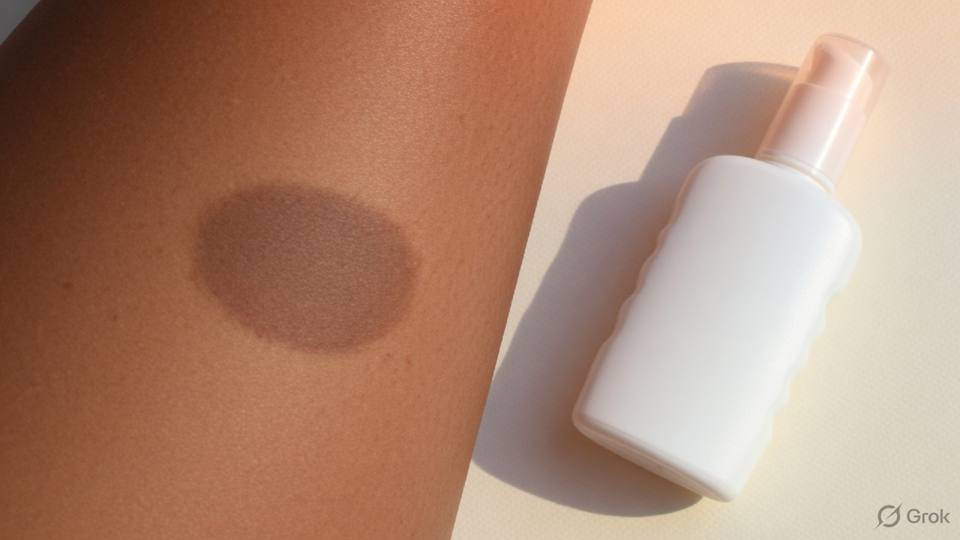
Why deeper skin marks after inflammation
In darker skin, inflammation often leaves a mark after the original spot has gone. This is called post-inflammatory hyperpigmentation, or PIH. Melanocytes, the cells that make pigment, respond to injury by producing more melanin, and the mark can sit in the same place for months. Acne, insect bites, eczema, burns, friction, and rough extractions can all trigger it. The mark is not a scar in the sense of a permanent dent, although scars and marks can exist together. The client often cares about the colour more than the texture. The therapist should explain that the mark is the skin's response to injury, not dirt, poor hygiene, or a sign that the client did something wrong.
Deeper skin has a higher risk of pigment change after heat, friction, and strong peels. A treatment that leaves a light-skinned client slightly pink can leave a darker-skinned client with a brown patch that lasts far longer. This is why the same protocol cannot be applied to every face. The therapist should ask about previous reactions, keloids, and dark marks after cuts, waxing, or laser. A history of a mark that stayed for a year after a minor injury is useful information. It does not mean the client cannot be treated; it means the plan should be conservative, with sunscreen as the first step and actives introduced slowly. The goal is to fade the mark without creating a new one.
The assessment should separate the mark from the condition that caused it. Ask whether the skin is still inflamed, whether new spots are forming, and whether the client is picking or scrubbing. A mark that is still being irritated every day will not fade, no matter which serum is applied. Look at the borders, the colour, and the texture. A flat brown patch is different from a raised or changing lesion. Photograph the area with written consent and use the same light at each visit, because memory is unreliable over eight weeks. Record the Fitzpatrick type, the products in use, and any recent procedure. These details make the plan repeatable and the progress honest.
The first job is to stop new inflammation. That means treating active acne gently, stopping scrubs and picking, and protecting the skin from sun every morning. The second job is support, with one cosmetic active such as azelaic acid, niacinamide, arbutin, or vitamin C. The third job is time. Typical fading takes weeks to months, and a mark can look darker before it looks lighter if the skin is irritated. The therapist should not promise removal in a set number of days. Review at six to eight weeks, compare the photographs, and decide whether to continue, change one product, or refer. If a mark is changing, bleeding, or new and dark, it is not a pigment case, and the client needs a same-day referral.
- 1. Ask what caused the mark and whether the original problem is still active.
- 2. Ask about dark marks after past cuts, waxing, laser, or insect bites.
- 3. Look at the border, colour, texture, and size in bright daylight.
- 4. Record the Fitzpatrick type and every product the client is using.
- 5. Photograph the area with written consent and the same lighting each time.
- 6. Stop picking, scrubbing, and any product that stings.
- 7. Start daily sunscreen before adding any brightening product.
- 8. Review at six to eight weeks and refer if the lesion is changing or bleeding.
Salon example
A fictional client, Farah, age twenty-six, had a dark mark on her cheek after a small pimple. She had squeezed the pimple and applied a paste made from lemon juice and baking soda. The mark was now larger and darker than the original spot. The therapist explained that the paste had caused more irritation and that the pigment would take months to fade. Farah wanted a quick peel. The therapist recommended sunscreen every morning, a mild cleanser, and a moisturiser, with no scrub and no paste. Azelaic acid was added after two weeks, on alternate nights, and the skin tolerated it. Progress was photographed at each visit in the same light. At eight weeks the mark had faded but was still visible. Farah was told that patience was part of the treatment and that a second strong product would not speed it up safely. She admitted that she had expected a dramatic change and said the photographs helped her see the smaller, real improvement. The therapist also asked her to bring the paste ingredients to the next visit, so the conversation about kitchen remedies could be specific rather than general.
Caution: Do not scrub a dark mark or treat it with lemon juice, baking soda, or another kitchen paste.
Sunscreen as the main step
For pigment, sunscreen is not an add-on. It is the main step. Ultraviolet light stimulates melanocytes and can darken an existing mark within days, especially on skin that already makes pigment easily. A broad-spectrum sunscreen of SPF 30 or higher should be used every morning, even indoors near a window, and reapplied during long outdoor time. The client should cover the face, ears, neck, and any exposed chest. A hat and shade add protection that no bottle can replace. A tinted sunscreen with iron oxides can also help with visible light, which matters for some pigment conditions. The therapist should treat sunscreen as a technique to be taught, not a product to be sold.
The amount matters, and most people apply far less than the label intends. For an average adult body, the FDA describes about one ounce, roughly a shot glass, as the amount needed for even coverage. That full-body measure is the practical version of the two milligrams per square centimetre used in the laboratory SPF test. For the face and neck, the therapist can teach an everyday measure such as two finger lengths, without turning it into a gram prescription. The point is not precision at the mirror; it is enough product to cover the skin evenly. Many clients miss the ears, the nose, the lips, the neck, the hands, the feet, and the hairline, so those spots belong in the demonstration.
Reapplication is where daily protection usually fails. The FDA advises reapplying at least every two hours, and sooner after swimming, heavy sweating, or towelling off. No sunscreen is waterproof, and a water-resistant label describes a limited time in water or sweat, not a whole afternoon. A client who applies once before work and then sits near a window may still be exposed. Makeup with SPF is not enough on its own, because most people apply a thin layer and do not reapply it through the day. A powder with SPF can top up over makeup, but it does not replace a proper base layer. A hat, shade, and sunglasses reduce the load that sunscreen has to carry.
Sunscreen alone will not erase a mark, but without it other products work against a moving target. The therapist should check how the client applies it, not just whether they own a bottle. Ask them to show the amount on their hand, and watch which areas they skip. Many people miss the jawline, the sides of the neck, and the upper lip. In a hot climate, a light formula may be more tolerable than a heavy cream, and comfort improves daily use. The salon can help the client find a texture they will actually wear. A product that stays in the bag protects no one. Consistency over months is the realistic goal, and the review should ask about the boring days, not the holiday.
- 1. Choose a broad-spectrum sunscreen of SPF 30 or higher.
- 2. Apply it every morning, including cloudy days and indoor window light.
- 3. Use enough for even coverage; about one ounce covers an average adult body.
- 4. Cover the ears, nose, lips, neck, hands, feet, and hairline.
- 5. Reapply at least every two hours, and sooner after swimming or sweating.
- 6. Do not rely on makeup with SPF as the only protection.
- 7. Add a hat, shade, and sunglasses for long outdoor time.
- 8. Check the client's technique at each visit and correct the missed spots.
Salon example
A fictional client, Divya, age thirty-four, wanted her dark upper-lip mark to fade before a family function. She used a brightening cream at night but no sunscreen during the day. She worked outdoors for part of each morning and did not reapply anything. The therapist explained that the morning sun was likely maintaining the mark. Divya chose a light, tinted sunscreen that she found comfortable and kept it in her bag. She applied it before leaving home, again at lunch, and once more before the drive back. She also wore a wide-brimmed hat on outdoor days and began using an SPF lip balm, because she had not realised her lips were exposed. The unlabelled brightening cream was stopped. At six weeks the mark was lighter but not gone. Divya said the change was slow, and the therapist agreed, showing her the first photograph beside the current one. The plan continued with sunscreen as the anchor and no extra serum. Divya also started keeping a second bottle at work, because she often forgot to carry the first one, and the therapist noted the change in her record.
Caution: A brightening product without daily sunscreen is incomplete care, and makeup with SPF is not a substitute for it.
Supportive actives and medical treatment
Several cosmetic actives can support the look of uneven tone. Azelaic acid and niacinamide are often used for redness and pigment, and arbutin and vitamin C are common in brightening products. These ingredients can be helpful, but they are support, not a guarantee. Introduce one at a time, test on a small area, and stop if irritation appears. Do not combine several brightening products in the hope of faster results, because irritation itself can create more pigment. The client should understand that pigment fades over months and that new sun exposure can undo progress. A calm routine with sunscreen is more reliable than a shelf of strong serums, and it is easier to keep when the client is tired or busy.
Some pigment treatments are medical. Hydroquinone is a medicine and should be used under a doctor's guidance, not as an unlabelled salon product. Oral tranexamic acid is also a medicine with risks, including clotting concerns, and it is not a salon recommendation. A dermatologist may combine treatments, adjust strength, and monitor side effects. The salon should not suggest these medicines, source them for clients, or tell a client to use a friend's supply. If a client is already using a medical pigment treatment, the therapist can support the basic routine and ask what the doctor advised. The salon should not add a strong active without that information. Referral is the correct response when the question moves beyond cosmetic support.
Steroid fairness creams are a particular danger, and they are common in many markets. They can thin the skin, cause visible veins, trigger acne-like bumps, and produce severe pigmentation when stopped. A cream bought without a prescription may contain a steroid, mercury, or another ingredient that is not on the label. Signs include shiny skin, fine hair, stretch marks, and dark patches that get darker over time. If a client is using one, advise stopping and seeing a doctor, because a sudden stop can cause a flare that needs supervision. Do not taper it yourself and do not replace it with another untested cream. The conversation should be respectful, because many clients were sold these products as a normal beauty purchase.
The honest timeline is the therapist's most useful tool. A new mark may improve a little by six weeks, but deeper pigment often needs several months, and some marks never disappear completely. The goal is a more even look, not a colour change. At each review, compare photographs, ask about new spots, and check whether the client has been using sunscreen on ordinary days. If a product is causing stinging, reduce it or stop it. If the client wants a faster result, explain that a stronger product raises the risk of more pigment. Keep the plan to one active and one review date. That simple structure is easier to follow than a complicated routine and easier to judge when the client returns.
- 1. Choose one supportive active: azelaic acid, niacinamide, arbutin, or vitamin C.
- 2. Test it on a small area for two to three nights before the full face.
- 3. Use it at the lower end of the label's frequency to start.
- 4. Do not layer two brightening products in the same routine.
- 5. Stop the active if the skin stings, flakes, or develops new redness.
- 6. Do not supply or recommend hydroquinone or oral tranexamic acid.
- 7. Advise stopping a steroid fairness cream and seeing a doctor.
- 8. Review at six to eight weeks with photographs and an honest comparison.
Salon example
A fictional client, Meena, age forty-two, brought a cream from a local shop that promised fair skin in two weeks. The tube had no ingredient list, only a picture of a pale face. She had used it for three months and noticed thinning skin and new spots on her cheeks. The therapist did not apply any treatment. She explained that the cream might contain a steroid and that stopping suddenly could cause a flare. Meena was advised to see a dermatologist for a supervised plan. In the meantime the salon kept a gentle cleanser, a moisturiser, and sunscreen, and added no brightening active. Meena was upset by the change in her skin and needed a clear, honest explanation. The therapist showed her the signs on her own face in a mirror and wrote them down, so she could describe them to the doctor. She also asked Meena to bring the tube to the appointment. The referral was the most useful service that day, and the salon booked a review for after the medical visit. Meena was asked to bring the tube and a list of what she had used before it, so the doctor could see the full history rather than one product.
Caution: Do not recommend a fairness cream, promise a lighter skin colour, or stop a steroid cream without medical advice.
This is a Nandu Nai textbook. It is a private brand book, not a government licence, and it does not give the right to give medical treatment.