
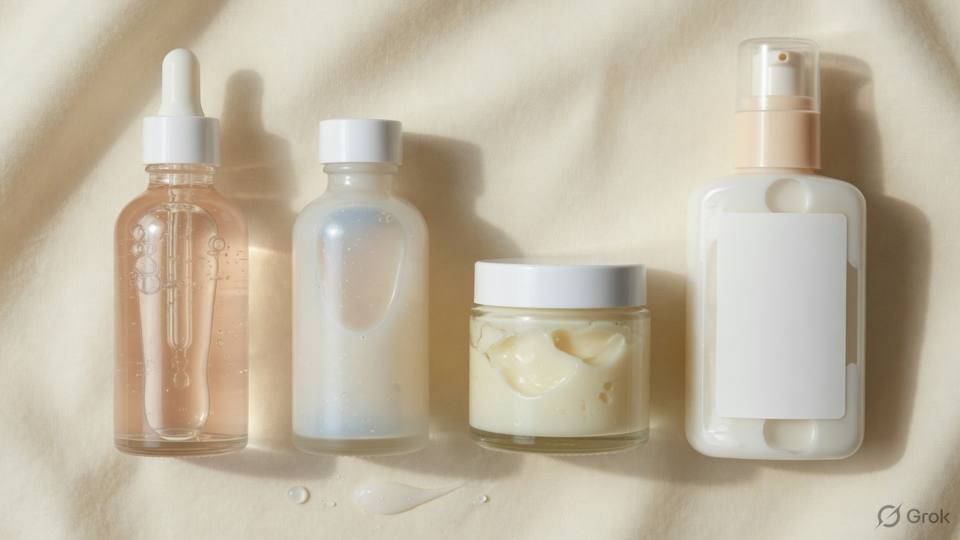
Cosmetic active versus medicine
A cosmetic product cleans, moisturises, perfumes, or changes appearance. A drug treats or prevents disease. The same ingredient can appear in both worlds at different strengths and with different claims. In a salon, the therapist works with cosmetic products and typical use, which means supporting the look and comfort of the skin rather than diagnosing acne or prescribing treatment. A cosmetic active may still cause irritation, so the therapist must respect the label, the client's history, and the skin's response. The word active sounds powerful, but it does not mean more is better. A short, steady routine usually beats a crowded shelf of half-used bottles.
Reading the label is a practical skill, and the cosmetic actives chapter is not the only place it matters. Look at the ingredient list, the directions, and the warnings. If a product says to use it twice a week, do not suggest daily use because the client wants faster results. If the label says to avoid broken skin, respect that. If a product has no ingredient list and no manufacturer details, do not apply it. The therapist should also ask what else the client uses, including prescription products from a doctor. A cosmetic serum can sit alongside medical treatment, but the timing and the combination need thought. When in doubt, keep the routine simple and refer.
The consultation decides more than the product. Ask what the client uses morning and night, how long the concern has been present, and what has already failed. Ask about pregnancy, breastfeeding, medicine, and recent salon treatments, because each changes what is safe to suggest. Ask what a good result would look like in the client's own words. Some clients want a calmer skin; others want a mark gone by a wedding. The therapist can work honestly with the first wish and must be cautious with the second. A plan built on the client's real routine, not an ideal one, is more likely to be followed. If the client will do two steps on a busy day, design two steps.
One new product at a time is the rule that makes the rest of the plan readable. Introduce it on a small area for two to three nights, then move to the full face if there is no sting, swelling, or spreading redness. Start at the lower end of the label's frequency, which is often once a day or every other night. Hold the cleanser, moisturiser, and sunscreen steady for two weeks so a reaction can be traced. Write the start date on the plan card. If a reaction begins, stop only the new product; stopping everything teaches nothing. This method is slower than a shopping spree, but it produces a clear answer, which is what the client came for.
- 1. Ask for the names of every product used in the morning and at night.
- 2. Check the ingredient list, directions, and warnings on each product.
- 3. Ask about pregnancy, breastfeeding, medicine, and recent salon treatments.
- 4. Choose one active for the first job and leave the rest for later.
- 5. Test the new product on a small area for two to three nights.
- 6. Start at the lower end of the label's frequency, not twice a day by default.
- 7. Hold the cleanser, moisturiser, and sunscreen steady for two weeks.
- 8. Write the start date and the review date on the plan card.
Salon example
A fictional client, Aarti, age thirty-five, brought a bag of unlabelled serums to her appointment. She had bought them online after watching videos about glass skin. One bottle had no ingredient list, and another had a strong perfume smell. The therapist explained that she could not safely apply products without a label and that she would not guess at the contents. Aarti was disappointed because she had spent money on them. The therapist did not criticise her. Instead, she reviewed the one product with a clear label, checked the directions, and planned a small test on the jaw. The unlabelled bottles were set aside. The routine was reduced to a mild cleanser, a moisturiser, and sunscreen, with the labelled serum used on alternate nights after the test. At the review, Aarti said her skin felt less irritated. The therapist noted that a clear label was more useful than a dramatic promise, and that the money already spent was not a reason to use an unknown product. Aarti photographed the label of the serum she kept, so she could find the same product again instead of buying another unlabelled bottle.
Caution: Do not apply a product that has no ingredient list or manufacturer details, however popular it is.
Common actives and sensible rhythms
Several cosmetic actives are common in salon and home care, and each has a typical rhythm. Salicylic acid helps loosen blocked pores and is usually used a few nights a week in a cleanser or leave-on product, not every day for a beginner. Benzoyl peroxide helps inflamed spots; a small amount on the spot or a low-strength wash once a day is a common start, and it can bleach fabric, towels, and hair. Azelaic acid supports acne and the look of marks and is often better tolerated than a strong acid. Niacinamide supports the barrier and the look of pores, often at two to five per cent in a serum or moisturiser. Vitamin C is a morning antioxidant used under sunscreen. These are cosmetic roles, not prescriptions, and the label decides the details.
Retinoid products need the slowest start of all. A pea-sized amount for the whole face, at night, two nights a week, is a common beginning for a beginner. Dryness, flaking, and a temporary purge can appear in the first weeks, so a moisturiser and sunscreen are essential. Build the frequency only after two calm weeks, and do not use a strong acid or a scrub on the same night. Vitamin C is usually a morning step because it sits well under sunscreen, while a retinoid is usually a night step. A brief tingle from an acid can be normal; a sting that lasts, swelling, or a rash is not. Stop the product and treat it as a reaction.
The order of steps matters less than consistency, but a few rules prevent trouble. Apply the thinnest product first, then the moisturiser, then sunscreen in the morning. If a retinoid is part of the plan, apply it to dry skin and follow with moisturiser if the skin is dry. Do not mix a strong acid and a retinoid in the same layer or the same night for a beginner. Do not use a vitamin C serum that has turned dark brown, because it is spent and may irritate. Do not add a new active during a reaction or a course of prescription treatment. The client should be able to say what they use and when without reading a list. If they cannot, the plan is too complicated.
Some clients will ask for faster results, and the honest answer is that cosmetic actives work over weeks. Texture and pores may look better by six to eight weeks; marks take longer; fine lines soften slowly, if at all. Promising more invites disappointment and, worse, encourages stacking. The therapist should explain the timeline at the start and repeat it at each review. If the client wants a stronger product, ask what they hope it will do and whether they have followed the current plan on most days. A missed routine is more common than a weak product. Change one thing, give it time, and keep a record. That is the professional pace, even when the client wants a dramatic one.
- 1. Use salicylic acid a few nights a week to start, not every night.
- 2. Apply benzoyl peroxide only as directed and warn that it can bleach cloth.
- 3. Use azelaic acid once a day to start and watch for lasting sting.
- 4. Choose niacinamide at a typical two to five per cent and start lower if the skin flushes.
- 5. Put vitamin C in the morning, under sunscreen, not after it.
- 6. Start a retinoid at pea size for the whole face, two nights a week.
- 7. Do not use a strong acid on the same night as a retinoid for a beginner.
- 8. Do not suggest a retinoid in pregnancy unless the client's doctor approves that product.
- 9. Stop any product that causes swelling, a spreading rash, or a sting that lasts.
Salon example
A fictional client, Sana, age thirty-eight, wanted to start three new products in one week: a vitamin C serum, a retinoid, and a salicylic toner. The therapist agreed to one. Sana began with vitamin C in the morning, applied under sunscreen, and kept the rest of the routine unchanged for two weeks. Her skin tolerated it. The retinoid was added next, two nights a week, with a pea-sized amount and a moisturiser on top. The salicylic toner was left for later. In the third week Sana developed mild flaking around the mouth. The therapist reduced the retinoid to one night a week and added a thicker moisturiser at night. The flaking settled. The toner was introduced after another two weeks, on alternate nights. The sequence was slower than Sana wanted, but it made the cause of each reaction easy to find. She said she finally understood which product did what, instead of blaming her skin. The therapist wrote the sequence on a card with the start date of each product, and Sana agreed to bring the card to every visit so the history did not depend on memory.
Caution: Do not start two new actives in the same week, and never start two on the same night.
What not to recommend
Some treatments belong to a doctor. Tretinoin is a prescription retinoid, and oral isotretinoin is a prescription medicine with important risks and monitoring. A salon should not recommend, supply, or adjust either one, and should not tell a client to stop or restart a course. Hydroquinone is a medicine for pigment and belongs under medical guidance. Oral tranexamic acid is also a medicine with risks, including clotting concerns, and is not a salon recommendation. Steroid creams for brightness are dangerous and can thin the skin, trigger acne, and cause stubborn pigmentation when stopped. When a client asks for any of these, the answer is a clear explanation and a referral, not a workaround.
Do not compound peels in the salon or mix ingredients to make a stronger product. Do not use a medical peel protocol without training, supervision, and the right setting. A peel is not a shortcut for a wedding, and a stronger peel is not a better peel. Do not recommend a retinoid to a client who is pregnant, planning pregnancy, or breastfeeding unless their doctor says a specific product is acceptable. Do not suggest a strong acid, a high-strength peel, or a combination of actives as a substitute for medical care. The therapist can explain why the boundary exists without frightening the client. The safe path is a simple routine and a referral when the question moves beyond cosmetic support.
Be careful with claims as well as ingredients. A product that promises to remove wrinkles, cure acne, or lighten natural skin colour is making a promise the salon cannot support. Collagen drinks, powders, and teas are not a treatment for skin aging, and the evidence is weak. A supplement recommended by a friend is still a medicine-like product with possible interactions, so do not suggest one. If a client is already taking a supplement or a prescription, record it and work around it. Do not sell a package of strong peels as an anti-aging cure. Honest limits are part of professional care, and they protect the client from harm and the salon from a complaint it cannot answer.
Every refusal should come with an alternative. If the client wants a strong peel before an event, offer a gentle cleanse, a hydrating mask, and a sunscreen review, and explain that calm skin photographs better than irritated skin. If the client wants a fairness cream, ask what they dislike and work on marks, texture, or acne instead. If the client wants a prescription product, help them prepare questions for a doctor. A refusal without a next step feels like rejection. A refusal with a plan feels like care. Write the alternative on the card so the client leaves with something practical, and set a review date so the conversation continues rather than ending at the word no.
- 1. Do not recommend, supply, or adjust tretinoin or oral isotretinoin.
- 2. Do not recommend hydroquinone or oral tranexamic acid; refer instead.
- 3. Do not recommend a retinoid in pregnancy or breastfeeding without the doctor's approval.
- 4. Do not compound a peel or mix strong actives to make a stronger product.
- 5. Do not use a medical peel protocol without training, supervision, and consent.
- 6. Do not recommend steroid creams or fairness creams for brightness.
- 7. Do not rank collagen drinks, powders, or teas as a skin treatment.
- 8. Offer a safe alternative and a referral instead of ending at no.
Salon example
A fictional client, Ritu, age thirty-three, asked for a strong peel because she wanted faster results before a wedding. She was also using a retinoid given by a friend and had not told her doctor. The therapist explained that a strong peel could not be stacked with a retinoid and that the combination could cause burns and dark marks, especially on her skin type. Ritu was unhappy because she wanted a dramatic change. The therapist did not promise one. She stopped the retinoid, kept a gentle routine, and recommended a dermatology appointment to review the treatment. She offered a hydrating service before the wedding instead of a peel. Ritu accepted reluctantly. The wedding took place without a peel, and her skin was calm in the photographs. She returned later with a medical plan and said the honest conversation had saved her from a worse outcome. The salon kept her as a client because it had not rushed her. Ritu later said the calm skin in the photographs mattered more than a dramatic change she could not have explained to her family. The therapist recorded the refusal and the alternative service on the card.
Caution: A strong peel is not a salon shortcut, and a prescription product is not a salon recommendation.
This is a Nandu Nai textbook. It is a private brand book, not a government licence, and it does not give the right to give medical treatment.