
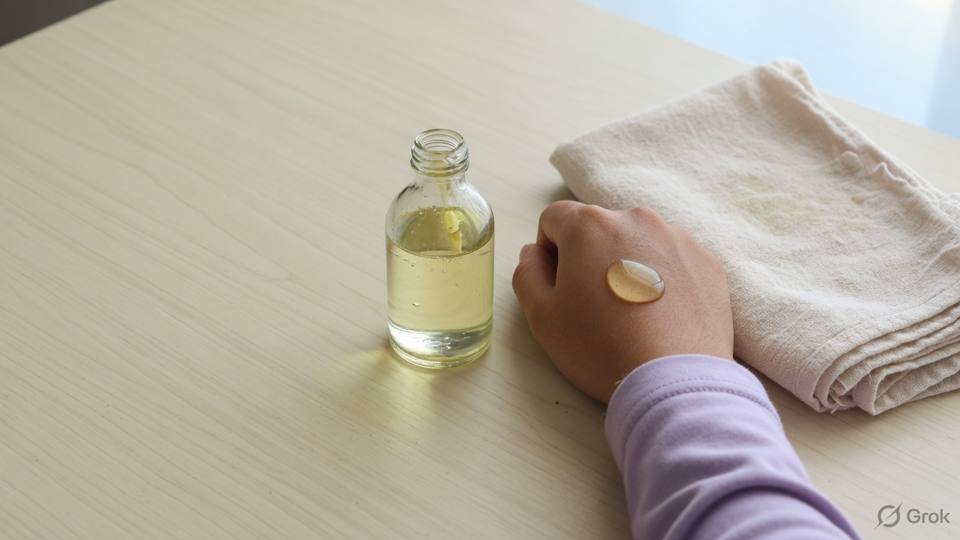
Choosing and using oil
A simple, unscented oil is enough for most massage. It lets the hands glide without dragging the skin, and it does not commit the client to a fragrance they may dislike. Choose a plain carrier oil such as sunflower, grapeseed, or fractionated coconut oil, and check for nut allergies before using almond or other nut oils. If the client has sensitive skin, eczema, or a history of reactions, test a small amount on the forearm and wait a few minutes. Fragrance-free is the safer default in a salon, because scent sensitivity and headaches are common and a client will rarely complain about a product they did not choose.
Use less oil than you think you need. You can always add a little, but a flooded back is difficult to work with and leaves the client slippery and cold. Warm the oil between your palms before touching the client, and keep a towel within reach to wipe your hands when you need a firmer grip. Do not put oil on the face unless the client has agreed to facial work, and keep it away from the eyes. If the client has a scalp treatment, use a small amount and ask whether they want to wash their hair afterwards. Wipe the feet before the client stands, or the floor becomes a hazard.
Some clients bring their own oil or ask for a specific blend. Read the label, ask what they expect from it, and check for anything they are allergic to. If the product contains a strong fragrance or a long list of essential oils, offer to use it only on a small area first, or suggest the salon's plain oil instead. Do not apply a product the client has not agreed to, and do not mix oils in an unlabelled bottle. Label anything you decant with the date and the contents, because a mystery bottle is a hygiene problem as well as an allergy risk.
Storage matters more than most therapists think. Oil goes rancid, especially in a warm room, and a rancid oil smells unpleasant and can irritate skin. Keep bottles closed, out of direct sunlight, and away from the heater. Use a pump or a dropper rather than dipping fingers into a jar, because fingers carry bacteria. Wipe the bottle between clients. If the oil has changed colour or smell, throw it out. These habits cost little and they are the difference between a professional room and one that smells like last month's stock. A clean bottle with a working pump is also easier to use with one hand while the other stays on the client.
- 1. Ask about nut allergies, skin reactions, and fragrance sensitivity before choosing a product.
- 2. Use a plain carrier oil as the default, and keep a fragrance-free option available.
- 3. Patch test clients with sensitive skin or a history of reactions, and wait before proceeding.
- 4. Warm the oil between your palms, and never pour it directly onto the client.
- 5. Use small amounts, and keep a towel within reach for your hands and for spills.
- 6. Keep oil away from the eyes, and use it on the face or scalp only with agreement.
- 7. Read the label of any product the client brings, and do not apply an unagreed product.
- 8. Label decanted oil with the date and contents, and store bottles closed and out of sunlight.
- 9. Use a pump or dropper rather than dipping fingers into a jar, and wipe the bottle between clients.
- 10. Throw out oil that has changed colour or smell.
Salon example
Farida books a relaxation massage and mentions that strong perfumes give her headaches. The therapist puts away the scented oil and chooses unscented sunflower oil. She asks about nut allergies and skin reactions, and Farida says she once had a rash from a massage oil she bought online. The therapist tests a drop on Farida's forearm and waits while they discuss the plan. There is no reaction. She uses a small amount, warming it between her palms, and keeps a towel on the side of the table. When Farida's back is slippery halfway through the session, the therapist wipes her hands rather than adding more oil. Farida says the lack of fragrance is a relief, because she usually spends the first ten minutes of a massage wondering whether the smell will trigger a headache. The therapist notes the sensitivity and the oil used on her record, and puts the scented bottle away in a closed cupboard so the next client does not meet it either. Farida books her next session with a note asking for the same oil, and the therapist adds it to the booking rather than relying on memory.
Caution: Never claim that an oil or a massage cures a disease. Oils make massage comfortable; they are not medicine.
Fragrance, sensitive skin, and what an oil cannot do
Fragrance is the most common reason a client reacts badly to a massage. Essential oils, perfumed lotions, and room sprays can trigger headaches, sneezing, wheezing, and skin irritation, and the reaction may start minutes after the product is applied. Clients with asthma, eczema, migraine, or pregnancy are more likely to be affected, but anyone can react for the first time. Keep the room free of strong scent, ventilate between clients, and ask before using anything fragranced. If the client says they are sensitive, treat that as a firm instruction rather than a preference to be talked around. A room that smells of nothing in particular is the safest room in the building.
Essential oils are not medicine in a massage bottle. Some have a pleasant smell and some have been studied for particular uses, but a therapist is not trained or licensed to prescribe them, and a blend is not a treatment for a disease. Do not invent blends for conditions, do not tell a client that a blend will balance their hormones, detox their liver, or cure an infection, and do not sell a bottle as a substitute for medical care. If a client asks for an oil for a medical problem, say that you can offer a relaxing massage and that their doctor is the right person for the medical question.
Sensitive skin needs a simple routine. Use the plainest oil available, apply a small amount, and watch the area for redness, itching, or raised skin during the session. If a reaction starts, stop, wipe the area with a clean damp towel, and do not apply anything else. Offer water and a cool compress, and record the product and the reaction. If the reaction is spreading, painful, or comes with swelling or breathing difficulty, seek medical help at once. For the next visit, use a different product or no product, and note the decision clearly so no one repeats the mistake.
The honest conversation about products is part of the service. Tell the client what you are using, why, and what it will feel like. If they ask whether a product will help a condition, say what you know and what you do not. If they ask about supplements or oils they have read about online, do not dismiss them, but do not endorse a medical claim you cannot support. A short, clear answer builds more trust than an enthusiastic one, and it keeps the salon out of claims it cannot defend. Consistency matters too: the same plain answer at the desk and in the room, so the client is not told two different things.
- 1. Ask about fragrance sensitivity, asthma, eczema, migraine, and pregnancy before applying anything.
- 2. Keep the treatment room free of strong scent, and ventilate between clients.
- 3. Use the plainest oil available for a client who reports sensitivity.
- 4. Apply a small amount first and watch the skin during the first few minutes.
- 5. Stop at once for redness, itching, raised skin, or sneezing, and wipe the area with a damp towel.
- 6. Record the product, the reaction, and what was used instead.
- 7. Seek medical help for spreading redness, swelling, or breathing difficulty.
- 8. Do not invent essential oil blends for medical conditions.
- 9. Do not repeat claims that an oil detoxes, balances hormones, or cures infection.
- 10. Refer medical questions to a doctor and describe only what massage can reasonably offer.
Salon example
A client named Rehana asks for a massage with lavender oil because a friend told her it would help her sleep and clear her sinuses. The therapist explains that the salon uses a plain carrier oil by default, that lavender smells pleasant, and that she cannot promise it will treat a sinus problem. Rehana is disappointed but agrees to the plain oil. Ten minutes into the session, the therapist notices a patch of redness on her upper arm where a previous salon had used a scented lotion. She stops, wipes the area with a damp towel, and asks whether it itches. Rehana says it does. The therapist applies nothing else, offers a cool compress, and keeps the rest of the session away from that arm. She records the product, the reaction, and the plain oil used, and suggests Rehana mention the reaction to a pharmacist if it spreads. At the next booking the file is checked before the client arrives. The therapist also checks the room spray, which a colleague had used that morning, and asks the team to stop using it before the first booking.
Caution: An oil blend is not a treatment. Do not make medical claims for products, and never suggest a product can replace a doctor.
Aftercare in the first hour
After a massage, the client needs a few minutes to return to normal. Offer water, let them dress without rushing, and ask how they feel before they leave. Advise them to drink water if they are thirsty, though there is no need to force large amounts. Suggest a quiet hour rather than a hard workout, especially after deep work. If the session focused on the legs, a long run or a heavy gym session straight afterwards is not ideal. If they feel light-headed, ask them to sit for a few minutes and have something to eat or drink before driving.
Heat is the part many clients get wrong. A sauna, steam room, or very hot bath immediately after deep work can make the client feel dizzy or overly relaxed, and it can increase soreness. Suggest waiting until the next day and using gentle warmth instead. The same applies to intense stretching or a sports session. Mention that mild soreness for a day is possible and that it should settle. Give the client a way to contact the salon if something feels wrong after they leave, and record the aftercare advice you gave in their notes, along with any warning signs you mentioned.
The first hour is also when the client notices things. A shoulder that feels looser, a neck that turns further, or a calf that still feels tight are all useful reports. Ask for them before the client leaves, and write them down. If they say the work felt too strong in one area, note the area and the pressure. If they say they feel nauseated or dizzy, keep them sitting and offer water, and do not let them drive until they are steady. A client who leaves feeling unwell will not remember the good part of the session, and they may not come back.
Aftercare is not a script read at the door. It is a short conversation about what to expect and what would be a warning sign. Say that mild soreness is normal for a day, that sharp pain, numbness, or tingling is not, and that a calf which swells or becomes hot needs medical attention. Say that water and rest help, and that a sauna or a heavy gym session can wait until tomorrow. Then ask whether they have any questions. Most clients do, and the answer takes a minute. Record what you said, so the next therapist can repeat it consistently and so the salon has a record if a question arises later.
- 1. Let the client sit up slowly, and stay nearby in case they feel dizzy.
- 2. Offer water, and let them dress without rushing.
- 3. Ask how they feel before they leave, and note anything they report.
- 4. Advise a quiet hour rather than a hard workout after deep work.
- 5. Advise against a sauna, steam room, or very hot bath straight after the session.
- 6. Mention that mild soreness for a day can happen and should settle.
- 7. Name the warning signs: sharp pain, numbness, tingling, or a calf that swells.
- 8. Give the client a way to contact the salon if something feels wrong later.
- 9. Do not let a light-headed client drive until they are steady.
- 10. Record the aftercare advice given and the client's response.
Salon example
After a ninety-minute deep back session, Rakesh stands up quickly and says he feels light-headed. The therapist asks him to sit down and brings water and a biscuit. They wait five minutes until the colour returns to his face. She explains that a sauna or a hot bath right now would not be a good idea and suggests waiting until tomorrow. Rakesh mentions he planned a gym session that evening. The therapist suggests a walk or light stretching instead, and says the heavy session can wait a day without losing anything. She gives him the salon number and asks him to call if the soreness is severe, if he feels unwell, or if anything feels numb or sharp. He leaves steady on his feet and messages the next day to say he slept well and the soreness was mild. The therapist records the dizziness, the advice, and the follow-up message, and notes that Rakesh should sit up slowly next time. She also writes a short line in the file about the gym plan, so the next deep session is not booked on the same day as a heavy training week.
Caution: Do not send a light-headed client out to drive. Let them sit, eat or drink something, and recover first.
This is a Nandu Nai textbook. It is a private brand book, not a government licence, and it does not give the right to give medical treatment.