
Fever and skin infection
A fever means the body is already working hard against an infection. Massage adds another physical load, can make the client feel worse, and may spread the sense of illness rather than ease it. A client with a raised temperature, chills, body aches, or a new cough should be sent home and encouraged to rest and seek medical advice if needed. Do not massage someone who is feverish, even if they insist that the massage will help them sweat it out. Wait until they have been free of fever for at least twenty-four hours without fever-reducing medicine and feel well again.
Skin infections need a more local decision. Bacterial infections such as impetigo, boils, or cellulitis should be covered and avoided, and the client should see a doctor if the area is spreading, hot, or painful. Fungal infections such as ringworm or athlete's foot are contagious, so do not work over them, wash your hands, and clean the table and any tools. Viral conditions such as shingles, cold sores, or warts also require the area to be avoided. A small, covered wound is different from an infected one. When in doubt, postpone the session and refer, and note what you saw in the client's record.
Cellulitis deserves a careful eye because it can look like a harmless red patch at first. The signs are warmth, swelling, redness that spreads, and tenderness, often on a lower leg. It is a bacterial infection of deeper skin tissue and needs antibiotics. Do not massage the area, do not apply oil, and do not assume it is a bruise or a reaction to a previous massage. Send the client to a doctor the same day. If they also have fever or feel unwell, that is more urgent. A therapist who massages spreading cellulitis can make a serious infection worse and can carry bacteria to the next client.
Cleaning is part of the answer. Wash your hands before and after every client, change the sheet, wipe the table and the oil bottle, and put used linen in a closed bin. Do not leave a used towel on the floor or on a chair that the next client will use. If a client has a contagious skin condition, clean the room before the next booking even if the area was covered. A salon that treats hygiene as a routine rather than an emergency will have fewer of these decisions to make, and the clients will notice the difference in how the room feels.
- 1. Ask about fever, chills, recent illness, and feeling unwell before the client undresses.
- 2. Send a feverish client home, and do not massage to help them sweat out an illness.
- 3. Ask the client to wait until they have been fever-free for a day without medicine.
- 4. Look at any area the client mentions before you touch it, and note redness, heat, or swelling.
- 5. Avoid infected, weeping, or contagious skin, and cover a small clean wound before working near it.
- 6. Do not massage spreading redness, cellulitis, or a hot swollen patch; refer the same day.
- 7. Wash your hands before and after the client, and clean the table, bottle, and touch points.
- 8. Put used linen in a closed bin and never on the floor or a chair.
- 9. Reschedule contagious conditions and clean the room before the next booking.
- 10. Record what you observed, what you advised, and when the client was rebooked.
Salon example
Pooja arrives for her appointment with a flushed face and a dry cough. She says she has had a temperature since the morning but took a tablet and feels well enough for a massage. The therapist checks that she is warm to the touch and asks about other symptoms. Pooja admits to body aches and a sore throat. The therapist explains that massage is not appropriate today and that rest and fluids are more useful. She offers to move the appointment to later in the week at no penalty and writes a short note on the booking. Pooja is disappointed but agrees, and the therapist asks whether she has someone to take her home. Two days later Pooja messages to say the fever has passed and asks whether she can come in. The therapist asks a few questions, confirms she has been free of fever for a day without medicine, and books her for the following afternoon. The note on the file records the postponement, the reason, and the date she was cleared. The desk is told as well, so the slot can be offered to someone on the waiting list rather than left empty.
Caution: Do not massage a feverish client to help them sweat out an illness. That is not a safe or effective treatment, and it can make them worse.
Suspected clot and recent surgery
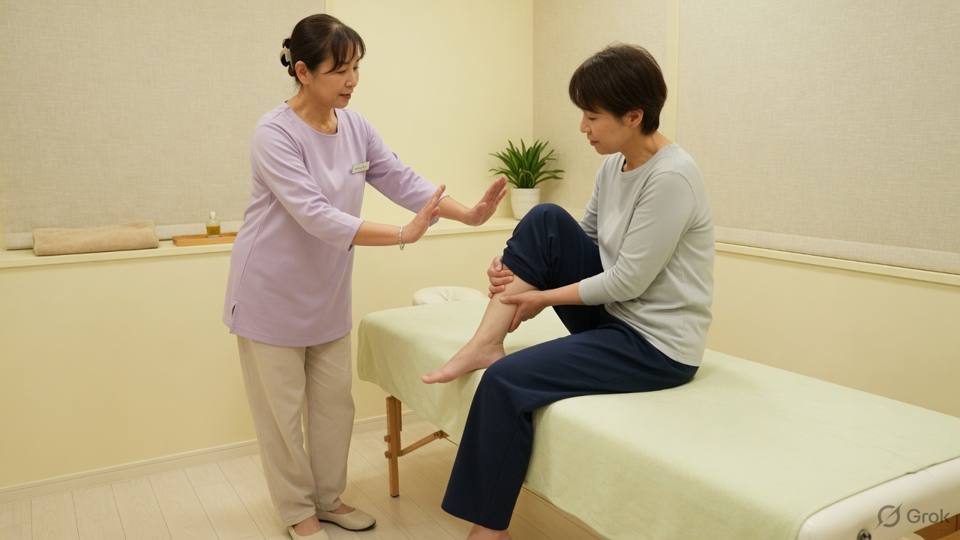
A hot, swollen, painful calf may be a deep vein thrombosis, a blood clot in a deep vein. The signs include swelling on one side, warmth, redness, tenderness, and pain that may feel like a cramp. Do not rub the calf. Do not massage the leg, apply heat, or encourage the client to walk it off. A clot can move to the lungs and become a medical emergency. Send the client to urgent care or call for medical advice the same day. If they also have chest pain, sudden breathlessness, or feel faint, call emergency services immediately. A known clot being treated with blood thinners still needs medical clearance before massage, because the risk has not gone away.
Compare the legs before you dismiss a complaint. Look at both calves from the same angle, and ask whether the swelling came on quickly or gradually. A calf that is visibly larger, warmer, and tender on one side is not a muscle cramp that needs stretching. Neither is a calf that swells after a long flight, a period of bed rest, or a recent operation. Do not put the leg on a cushion and work the other one as a compromise; if a clot is possible, the session should not continue on that leg at all, and the client should be seen by a clinician that day.
Recent surgery is another reason to wait. The body is healing, the risk of clot is higher, and pressure near the wound can disturb the tissue. Do not massage over a recent incision, a healing joint replacement, or a cosmetic surgery site until the surgeon has given clearance. Ask when the operation was, what was done, and whether there are restrictions on movement or pressure. Once the wound is fully closed and the surgeon agrees, gentle work around the scar may be appropriate, but never pull or stretch a fresh scar. When in doubt, ask the client to obtain written clearance and keep the session away from the area until it arrives.
Blood thinners complicate the picture even after clearance. A client on warfarin, apixaban, rivaroxaban, or another anticoagulant bruises and bleeds more easily, so pressure should be lighter and the skin checked as you work. Do not advise anyone to stop or change a medicine before a massage; that is a doctor's decision. If a client says they skipped their dose so they could have deeper work, stop and explain why that was a bad idea. The therapist adapts the massage to the medicine, never the medicine to the massage. A bruise that appears after light work is a reason to ask about medicines, not a reason to press harder to see what happens.
- 1. Ask about long flights, bed rest, recent surgery, and previous clots before leg work.
- 2. Compare both calves for size, warmth, colour, and tenderness with the drape in place.
- 3. Do not rub, heat, or massage a calf that is hot, swollen, and painful.
- 4. Send a suspected clot to urgent care the same day, and call emergency services for breathlessness or chest pain.
- 5. Ask for the surgeon's clearance before working near any recent operation.
- 6. Stay away from a fresh incision, a healing joint replacement, and a new cosmetic site.
- 7. Work around a fully healed scar lightly, and never pull or stretch it.
- 8. Reduce pressure and check the skin for clients on blood thinners.
- 9. Never advise a client to stop or change a medicine for a massage.
- 10. Record the findings, the referral, and the clearance when it arrives.
Salon example
Harish asks for a leg massage because his right calf feels tight and heavy. The therapist looks at both legs and sees that the right calf is visibly swollen and warmer than the left. Harish says it started two days ago after a long flight and that the area is tender. The therapist does not touch the leg. She explains that these signs could suggest a clot and that massage could be dangerous. Harish says he booked the massage because he thought it would help circulation after the flight. The therapist tells him that a massage is the last thing the leg needs today, advises him to go to urgent care, and offers to call a taxi. She writes down what she saw, the time, and the advice, and asks him to message the salon afterwards. That evening he reports that the clinic sent him for a scan and started treatment. The therapist notes the outcome on his file and adds a question about long flights to the intake form. She also asks the desk to note that leg bookings for clients over fifty should include a question about recent flights and swelling.
Caution: A suspected clot is an emergency. Do not massage, do not apply heat, and do not wait to see whether it settles.
Intoxication and pregnancy
A client who is intoxicated cannot give reliable consent. Alcohol and drugs alter sensation, judgment, and balance, so the client may not feel pressure accurately or be able to ask you to stop. They may also become nauseated, dizzy, or unwell during the session. Do not massage someone who is clearly intoxicated. Offer water, keep them in a safe place, and help them arrange a safe way home. If they become aggressive or unwell, call for help. Record the refusal and the reason. Being firm about this boundary protects the client, the therapist, and the salon, and it is not a lost sale.
Pregnancy requires additional training, not just a softer version of the usual routine. Work only within your training and ask for medical clearance when the pregnancy is high risk or the client has complications such as bleeding, contractions, or high blood pressure. Use side-lying or semi-reclined positioning after the first trimester, support the abdomen and knees with pillows, and avoid strong pressure on the lower abdomen. Do not promise that massage will induce labour, turn a breech baby, or treat infertility. If you are not trained in prenatal massage, refer the client to someone who is, and say so without embarrassment.
The first trimester is a common point of confusion. Some salons take the booking, some refuse it, and some ask for a doctor's note. Decide the policy with the salon owner and apply it consistently. If you do take the booking, keep the session shorter and lighter, avoid the lower abdomen, and stop if there is any bleeding, cramping, or dizziness. Ask the client to tell you at once if anything changes. A pregnant client who feels listened to will trust your advice about positioning and aftercare, and that trust is worth more than an extra booking. A written policy, shown at the desk, saves the therapist from making the decision alone at the door.
Later pregnancy brings practical changes. The client may not be able to lie flat on her back for long, may need to turn more often, and may feel warm quickly. Keep the room cool, offer a pillow under the knees or between them, and let her choose the position. Avoid deep pressure on the legs because the risk of clots is higher, and treat a hot swollen calf as an urgent referral rather than a cramp. Do not use essential oil blends unless you have specific prenatal training for that oil; a plain carrier oil is the safer default. Stop for dizziness, nausea, or any feeling that something is wrong.
- 1. Do not massage a client who is intoxicated; help them get home safely and record the refusal.
- 2. Ask every client of childbearing age whether they are pregnant or could be.
- 3. Take a pregnancy booking only if you are trained in prenatal massage; otherwise refer.
- 4. Ask for medical clearance for a high-risk pregnancy or any complication.
- 5. Use side-lying or semi-reclined positioning after the first trimester, with pillows for support.
- 6. Avoid strong pressure on the lower abdomen and deep pressure on the legs.
- 7. Stop for bleeding, cramping, dizziness, or nausea, and refer the same day.
- 8. Keep the room cool and let the client change position often.
- 9. Use a plain carrier oil unless you have specific prenatal training for a blend.
- 10. Make no claims about inducing labour, turning a breech baby, or treating infertility.
Salon example
Sameer arrives for a couple's booking and smells of alcohol. He is cheerful but unsteady and repeats the same sentence twice. The therapist explains that she cannot begin the massage while he is intoxicated and that the priority is getting him home safely. Sameer protests that he is fine. She offers water and asks whether she can call a friend or a taxi. His partner, who is not intoxicated, agrees to take him home. The therapist records the refusal and the reason on the booking and tells the desk so the couple's slot is not resold. The following week Sameer calls to apologise and rebooks. The therapist confirms the salon policy before the new appointment, keeps the session alcohol-free, and works at the pressure he chooses. She also asks the desk to put the policy on the booking confirmation, because a rule that is only spoken at the door is a rule that causes arguments at the door. Sameer says the refusal was the right call, and the therapist agrees without lecturing him about the evening. The couple rebook the same slot for the following month, and this time both arrive sober and early.
Caution: An intoxicated client cannot consent reliably. Ending the session is the professional choice, not a lost sale.
This is a Nandu Nai textbook. It is a private brand book, not a government licence, and it does not give the right to give medical treatment.