
Manicure order and the clock
A basic manicure belongs in forty-five to sixty minutes, and a gel manicure needs sixty to seventy-five. The clock is not a punishment; it is a plan. Consultation and setup take about five minutes. Removing old product takes ten to fifteen. Shaping and cuticle work take another ten to fifteen. Hand massage takes five to eight, and polish or gel takes ten to twenty depending on the finish. If the booking is forty-five minutes and the client wants gel, the service will either run late or lose a step, and the step that gets lost is usually the one that protects the nail. Quote the realistic time at the desk so the appointment starts with the right expectation.
The order exists because each step prepares the next. Consult first, because a health question can change the whole plan. Remove old product before shaping, because filing over a lifted edge pushes product into the gap. Shape before cuticle work, because dust from the file should not land on skin that has just been pushed. Push the cuticle before product, because product will not bond to skin or to oil. Clean and dehydrate before the base coat, because dust and oil are the two quiet causes of early lifting. Massage comes before polish or gel, not after, because oil on the plate prevents adhesion. Each step has a reason, and when the order changes, something fails later.
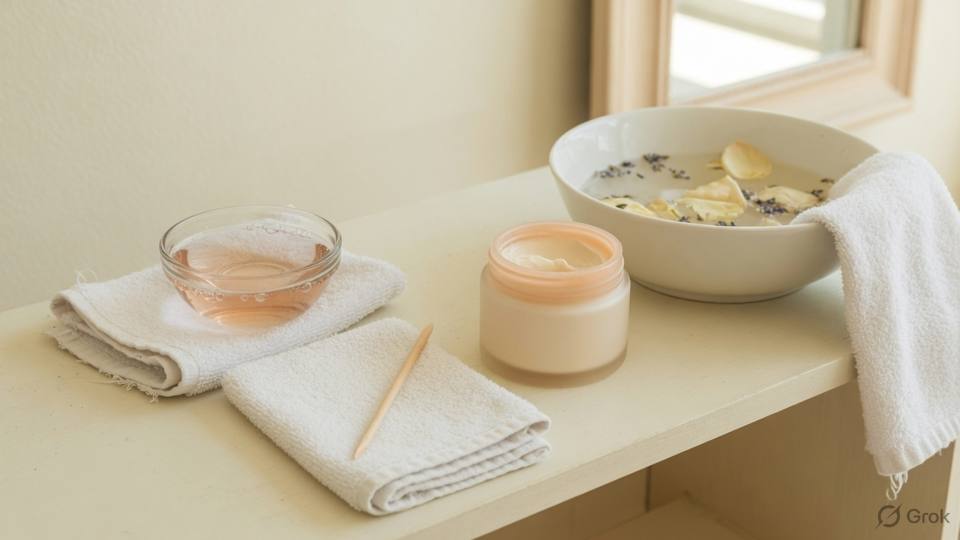
Water is the variable most technicians underestimate. A soak softens the plate, and a softened plate expands; when it dries, it shrinks, and product applied in between can lift at the edges. For a plain polish manicure, a short soak is pleasant and harmless. For gel or an enhancement, dry prep is more reliable: clean the plate, push the cuticle with softener, and keep the nail dry before the base coat. If the client has had a soak, wait until the plate looks dry again, or use a dehydrator as the product instructions allow. Do not rush from the bowl to the lamp because the booking is tight. That shortcut is one of the most common reasons a set peels within a week.
Rushing shows in specific places. Cuticle work gets skipped, so the product sits on a ragged edge and lifts. Oil and massage are cut, so the hands look dry and the service feels transactional. Dust is left on the plate, so the polish chips early. The technician starts watching the clock instead of the nail, and a side wall gets filed too thin. Clients do not measure a manicure in minutes, but they do notice a sore finger and a chip on day three. Protect the steps that affect the result, and if time runs short, shorten the art or the massage, never the prep or the cure.
- 1. Book forty-five to sixty minutes for a basic manicure and sixty to seventy-five with gel.
- 2. Consult and check the skin before any tool is laid out.
- 3. Remove old product completely, with a soak rather than a pry.
- 4. File and shape the natural nail before cuticle work.
- 5. Soften, then push the cuticle at a shallow angle, with no cutting.
- 6. Clean and dehydrate the plate, and keep oil off it until the finish is done.
- 7. Massage before the finish, then wipe the plate clean before the base coat.
- 8. Leave five minutes at the end to check shape, cuticle line, and free edge.
Salon example
A client named Priya books a gel manicure at four in the afternoon and mentions that she has to collect her daughter at five. The technician checks the clock, sees that the slot is sixty minutes, and plans the service out loud: removal of the old gel, shape, cuticle, base, two colour coats, top coat, and a short massage. She starts with the removal and does not add a soak that is not needed. She files and shapes while the wraps do their work on the other hand, keeping the dust away from the skin. The cuticle work is quick but not rushed, because she knows that a flooded cuticle line will lift within days. She applies thin coats and cures each one for the full time, which feels slow but keeps the finish flat. The massage is five minutes instead of eight. She finishes at ten minutes to five, checks all ten nails from the client's side, and writes the removal date on the card. Priya leaves on time and comes back three weeks later with a set that has grown but not lifted.
Caution: Do not borrow time from cuticle work or curing to catch up.
Pedicure without blades
A pedicure starts with a conversation and a careful look, not with a soak. Ask about diabetes, numb feet, poor circulation, and nerve damage, and ask whether any toe has been painful or changed colour. Look between the toes and along the sole for a cut, a blister, a rash, or a wound. If the skin is not intact, do not soak; clean and work dry, or refer. A soak feels generous, but warm water on broken skin is an invitation, and water between the toes is the beginning of a problem that can take weeks to settle. The assessment takes two minutes and decides the rest of the service.
File the nails straight across, or with a very soft curve, and do not cut down the sides. Cutting down the side of a toenail encourages the edge to grow into the skin, and an ingrown nail is painful and often needs a clinician. Use a file rather than a nipper for the length, and keep the corners slightly rounded so they do not catch on socks. If a corner is already growing into the skin, do not dig for it. Soak briefly if the skin is intact, clean gently, and refer. The client may ask you to cut the corner out because a previous salon did it, but the salon that does that is treating a medical problem with a cosmetic tool.
Hard skin on the heel and the ball of the foot is reduced with a file, in layers, over visits. A blade is never used, even on skin that looks dead, because the depth is impossible to judge and a small slip on a foot can become a wound that will not heal. Work on dry skin or lightly damp skin, use a coarse file with light pressure, and stop before the skin is pink and raw. A pedicure is not a race to remove everything in one session. If the skin is thick, reduce some of it, oil it, and book the next visit. Clients are often surprised that a gradual approach leaves them more comfortable than an aggressive one.
Dry the feet carefully, especially between the toes, before any product goes on. Massage with a light lotion only if the skin is intact, and keep the pressure comfortable. Apply polish in thin coats, cap the free edge as you would on a hand, and let each coat touch-dry. Check the nails from the client's side and look for polish on the skin, which should be removed with a brush rather than a blade. Give aftercare in plain words: dry between the toes, change socks, wear shoes that do not press, and book a removal rather than peeling the polish. A pedicure that ends with dry feet and clear advice lasts longer than one that ends with a dramatic rasp.
- 1. Ask about diabetes, numbness, circulation, and any painful toe before you start.
- 2. Check between the toes and along the sole for cuts, blisters, rash, or wounds.
- 3. Do not soak if the skin is not intact; work dry or refer.
- 4. File the nails straight across with a soft corner, never down the sides.
- 5. Soak briefly only when the skin is intact, and dry thoroughly afterward.
- 6. Reduce hard skin with a file in layers, and stop before the skin is pink.
- 7. Never use a blade on a foot, even where the skin looks dead.
- 8. Dry between the toes, polish thinly, and give aftercare before the client leaves.
Salon example
A client named Sunita comes for a pedicure before a family wedding. She has thick skin on both heels, and the nail on her big toe is pressing into the skin at the corner. The technician asks about diabetes and numbness, checks the skin between the toes, and sees that the corner is red but not open. She explains that she will file the nail straight across and leave the corner alone, and that a doctor or a podiatrist should look at the ingrown edge. She soaks briefly, cleans gently, and reduces the hard skin in two passes with a file, stopping while the skin is still intact. She does not use a blade, and she does not dig at the corner. She dries between every toe, massages with a light lotion, and applies a thin polish with a capped edge. Sunita is disappointed that the corner is not cut out, but the technician explains that cutting it would make the next nail grow in worse. Two weeks later the redness has settled, and Sunita books a regular pedicure and a separate appointment with a podiatrist.
Caution: Never use a blade on a foot, even where the skin looks dead.
Diabetic or numb feet: tidy only or refer
A foot with reduced sensation does not feel the small injuries that a normal foot would report. A client with diabetes, nerve damage, or poor circulation may not notice a nick, a burn from a hot soak, or a blister from a shoe, and a small wound can become a serious one within days. That is why the service changes: a careful cosmetic tidy if the skin is intact, and a referral if it is not. The tidy means filing the nails, cleaning gently, pushing the cuticle, oiling, and polishing only if the skin is sound. It does not mean deep cleaning, hard-skin removal with a blade, or a long hot soak.
Check sensation in a simple, respectful way. Ask whether the client can feel their feet normally, whether they have had a wound before, and whether a doctor has told them to avoid pedicures. Look at the skin colour, the temperature, and the spaces between the toes. You are not testing with a pin and you are not diagnosing neuropathy; you are gathering enough information to decide whether this foot is safe for a cosmetic service. If the client says they cannot feel much, treat the foot as high risk even if it looks normal. If there is a wound, an ulcer, a blister, or a colour change, do not soak, do not file over it, and refer.
The tools matter more on a high-risk foot. Use a file, not a blade. Keep the soak short or skip it. Do not use a hot towel or a heated boot. Do not push hard into the side wall, and do not dig under the free edge. Dry every toe carefully, because moisture between the toes is a common start of trouble. Use a light lotion rather than a heavy massage, and skip the massage if the skin is fragile or the circulation is poor. Check the skin again at the end of the service, because a nick that happened during filing may not be visible until the dust is wiped away. If you find one, stop, clean, cover, and refer.
The conversation needs to be direct without being frightening. Say that the foot needs a gentler service because it may not feel a small injury, and that a wound on this foot is a doctor's job, not a pedicure. Do not say that the foot is fine when you cannot know that. Do not promise that a polish will protect the nail. Give the client a clear reason to return: a short tidy every few weeks, with a check of the skin each time. Write on the card that the client is diabetic or has reduced sensation, so every technician who follows you treats the foot the same way. Consistency is part of the care.
- 1. Ask directly about diabetes, numbness, poor circulation, and previous foot wounds.
- 2. Look at colour, temperature, and the skin between every toe.
- 3. Do a cosmetic tidy only when the skin is intact.
- 4. Keep the soak short or work dry, and never use a hot soak.
- 5. File the nails and reduce hard skin lightly, with no blade at any stage.
- 6. Do not dig into the side wall or under the free edge.
- 7. Dry every toe, use light lotion, and check the skin again before the client leaves.
- 8. Refer any wound, ulcer, blister, or colour change, and record the advice.
Salon example
A client named Mohan has had diabetes for fifteen years and books a pedicure because his daughter is getting married. He says his feet feel numb most of the time and that he once had a wound that took months to heal. The technician does not soak the feet. She checks the skin between the toes, finds it intact, and explains that she will do a tidy rather than a full pedicure. She files the nails straight across, cleans gently, and pushes the cuticle without pressure. She reduces a little hard skin with a file and stops while the skin is still closed. She dries every toe, applies a light lotion, and skips the massage because the circulation is poor. She checks the skin again at the end and finds no nick. She tells Mohan that a wound on this foot needs a doctor, not a pedicure, and writes the advice on his card. He books a short tidy for six weeks, and the technician notes the plan so the next appointment follows the same routine. The card note includes the six week interval and the no-soak rule, so the next technician follows the same plan.
Caution: Numb feet cannot feel your mistakes; tidy only or refer.
This is a Nandu Nai textbook. It is a private brand book, not a government licence, and it does not give the right to give medical treatment.